The Prayer You Can Say Asleep — and Still Miss

The lord’s prayer explained well is worth more than the lord’s prayer merely repeated, because this is the most prayed prayer in the world — and therefore the easiest to pray without thinking. Millions of people can recite it from childhood, in churches, at funerals, at bedsides, and in moments of crisis. Familiarity is a gift, but it carries a risk: words repeated ten thousand times can pass through the mouth without ever stopping in the mind. At a funeral, the words come out steady even when the mind is nowhere near steady. In church, a whole room can say them together, in rhythm, and every person in that room can be somewhere different in their head. That is not hypocrisy. It is what happens to any words you have known for decades. They wear smooth, like a stone in a pocket, and smooth things are easy to hold without really looking at.
This article slows the prayer down, phrase by phrase, so that each line can be heard again as if for the first time, and so that the prayer can become a pattern for your own praying, not only a text to recite. Jesus did not give His disciples a long prayer. In most English versions it runs to about sixty words, and yet people have spent two thousand years finding their whole lives inside them: worship, surrender, hunger, guilt, forgiveness, fear, and the hope that the world could be different from the way it is. If you have ever wondered why such a short prayer carries so much weight, the answer is partly in its order. It does not start with you. It starts with God, and only after God has been put first does it turn to bread, forgiveness, and protection. That order, before any single phrase, is the first lesson.
The prayer comes from a moment of honest asking. A disciple watched Jesus pray — actually watched, long enough to notice that His praying was different from the noisy, performative praying around them — and said, in effect, teach us to pray. That is the human situation behind this prayer: not a scholar asking for a theory of prayer, but a friend asking, show me how you do this. Everything that follows makes more sense when you hear it as an answer to that request.
Two Moments, One Prayer: Matthew and Luke Side by Side

The prayer appears twice in the Gospels, and the two appearances are not identical. That surprises some readers, and it should not. In Matthew 6, the prayer sits in the middle of the Sermon on the Mount, right after Jesus warns against two distortions of prayer: praying to be seen, and piling up empty words as if God were impressed by quantity. The prayer He gives in response is deliberately short and deliberately ordered, as if to say, this is what prayer looks like when nobody is watching and nothing is being performed.
In Luke 11, the setting is more intimate. Jesus has just finished praying somewhere, and a disciple asks Him to teach them, just as John taught his disciples. The version Jesus gives there is shorter. It opens simply with “Father”, not “Our Father in heaven”. It moves more quickly to bread, forgiveness, and temptation, and in its earliest form it does not include the petition about God’s will being done on earth as it is in heaven. Later copies of Luke were filled out to match Matthew, which is why some Bibles print a longer Luke version and others print the shorter one, often with a footnote. Neither Gospel is trying to catch the other out. They preserve the prayer as it was given on different occasions, to different listeners, for the same purpose.
Put side by side, the two versions teach the same thing the Sermon on the Mount teaches: Jesus gave a pattern, not a spell. Matthew introduces it with words that mean, in effect, pray in this way, pray along these lines. If it were a formula that only worked when every syllable was exact, the existence of two versions would be a problem. Instead, the differences are the proof that it was never meant to work that way. The core never changes — Father, honor, kingdom, bread, forgiveness, rescue — but the wording bends to the occasion. Whatever version you learned as a child, you can recognize it here, and you do not need to unlearn it to understand it. Christians across traditions pray this prayer, and this explanation follows the Matthew form while noting where traditions differ, so that whatever version you learned, you can find your way through it.
The Prayer Itself, in Full
Before the phrases are taken one by one, here is the whole prayer in the traditional wording (King James Version), so you can read it straight through and then return to it as each phrase is explained. Some modern versions print the prayer ending at “deliver us from evil”; the closing line of praise is discussed in the doxology section below.
Our Father which art in heaven, Hallowed be thy name. Thy kingdom come. Thy will be done in earth, as it is in heaven. Give us this day our daily bread. And forgive us our debts, as we forgive our debtors. And lead us not into temptation, but deliver us from evil: For thine is the kingdom, and the power, and the glory, for ever. Amen.
If you learned a different wording — “trespasses” instead of “debts”, or no closing praise line — you are praying the same prayer. The sections that follow explain why those differences exist, phrase by phrase, so that no version feels like a stranger to you.
“Our Father in Heaven”: A Family Name for God
The prayer opens with an astonishing word: “Our.” Not “my Father,” though the relationship is personal, but “our Father,” because prayer in Jesus’ teaching is never only private. To call God Father in this prayer is to join a family you did not choose and cannot unchoose: all the other people, across the world and across the centuries, who pray the same words. That single word quietly corrects two common distortions of prayer — prayer as a private transaction between me and God for my benefit, and prayer as a performance for an audience. This prayer is communal from its first syllable, even when prayed alone in a room.
“Father” itself was a bold way for Jesus’ first hearers to address God. In the ancient world, fatherhood carried authority, provision, and protection, but also intimacy: a child could approach a father directly, without an intermediary or a formal petition. Jesus invites His disciples into that same directness. It does not mean God is only like a human father — human fathers fail, and for some people the word “father” carries painful associations. The prayer invites you to let God’s fatherhood redefine the word, rather than letting a human experience define God. He is a Father who knows what you need before you ask, who gives good gifts, and whose love does not depend on your performance. For readers for whom “father” is a tangled word, it can help to linger on the “in heaven” half of the opening for a while: this Father is not a larger version of a human father, with the same failures.
“In heaven” completes the opening by holding two truths together: nearness and majesty. God is near enough to be called Father, and yet He is not small, local, or manageable. Heaven here does not mean a distant place where God is absent from earth; it means the realm from which God rules, the reality that surrounds and upholds this one. To begin prayer with “Our Father in heaven” is therefore to begin with both confidence and reverence: you are a child speaking to a Father, and you are a creature speaking to the King of all things. Good prayer holds both, and this prayer teaches you to hold both in a single breath.
“Hallowed Be Your Name”: Worship Before Asking
“Hallowed be your name” is the phrase most likely to be recited without being understood, because “hallowed” is not a word anyone uses outside this prayer. It means honored, set apart, treated as holy. God’s name, in the Bible, stands for God’s character and reputation: who He is, what He has done, how He is known in the world. To pray that His name be hallowed is to ask that God be honored as He deserves, in your own life, in the church, and in the world — and it is also to commit yourself to honoring Him, since you are one of the ways His name becomes known to others.
Notice the order again: worship comes before asking. Before bread, before forgiveness, before protection, the prayer asks that God be glorified. This is not because God needs flattery before He will listen; it is because the pray-er needs reorienting. Beginning with God’s holiness puts your requests in proportion. A day that starts with “hallowed be your name” is a day in which your problems are real but not ultimate, in which God’s character is the fixed point and your circumstances are not. That reorientation is one reason this prayer has steadied people in crises for two thousand years: it begins by looking up before it looks inward. Practically, this phrase can expand into your own words. Hallowing God’s name might mean thanking Him for something specific He has done, praising Him for an attribute you have seen in creation or in Scripture, or simply sitting quietly in awareness of His greatness before rushing to requests. It is the doorway of the prayer, and rushing through a doorway means missing the house.
“Your Kingdom Come, Your Will Be Done”

The second and third petitions belong together, and together they form the prayer’s great surrender. “Your kingdom come” asks that God’s rule — His just, merciful, healing reign — would break into this world more fully: in your heart, in your family, in your community, and ultimately in all things. The kingdom, in Jesus’ teaching, is both present and still coming: present wherever people live under God’s rule, and still to come in its fullness. Praying for it to come is therefore both a hope for the future and a commitment in the present, because you are asking to live as a citizen of that kingdom now. It is not only about heaven after death. When you pray “your kingdom come”, you are praying for God’s rule to break into this world today: in a reconciled family, a just decision at work, a community that feeds its hungry, a heart that stops nursing revenge. The future hope is real, but a kingdom prayer that never touches today has been cut in half.
“Your will be done, on earth as it is in heaven” sharpens the surrender. In heaven, the picture goes, God’s will is done gladly, fully, and without resistance. On earth, it often is not — by us, by others, by whole societies. To pray this line honestly is to say, “God, I want what You want, even where it differs from what I want.” That is a costly prayer, and Jesus Himself prayed its hardest form in Gethsemane, asking that the cup might pass and yet submitting to the Father’s will. Praying it does not mean abandoning your own desires or pretending you have none; it means holding them openly before God and trusting His wisdom more than your own understanding when the two seem to conflict. This petition also guards against using prayer as a way of bending God to your plans. It is possible to pray at length while never once asking what God wants, treating prayer as a spiritual technique for getting outcomes. The Lord’s Prayer refuses that approach at its center: before you ask for anything for yourself, you have asked for God’s kingdom and God’s will. If you take only one habit from this article, let it be this: when you pray for a decision, a job, a relationship, or a healing, begin by praying these two lines slowly and meaning them. A prayer for guidance that starts here is less likely to mistake your own urgency for God’s direction.
“Give Us Today Our Daily Bread”: Dependence Without Shame
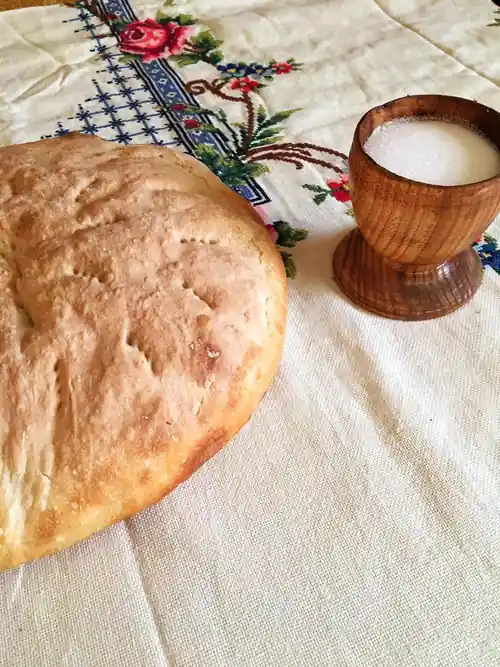
After three petitions about God, the prayer turns, at last, to us — and it turns to something wonderfully ordinary: bread. “Give us today our daily bread” is a prayer for provision, for the food, shelter, work, and necessities of this day. The word “daily” matters: in the ancient world, bread was baked fresh each day and did not keep well, so daily bread meant trusting God one day at a time rather than stockpiling security. The prayer teaches dependence without shame. Needing daily provision is not a failure; it is the human condition, and asking God for it is an act of dignity, not begging.
Notice also the plural: “give us.” This is not only a prayer for my bread, but for our bread — for the household, the community, the neighbor whose cupboards are bare. A prayer that asks for daily bread while ignoring a hungry neighbor is incomplete, and the early church understood this: sharing food, caring for widows and the poor, and practicing generosity were seen as part of living this petition. Praying “give us” should therefore widen your eyes as well as your hands. It may prompt a practical act — a meal shared, a donation given, a job offered — and that act is part of the prayer’s answer, not separate from it. The petition also covers more than literal bread. For a first-century hearer, bread stood for all sustenance; for us, daily bread can honestly include the things a day requires: strength for work, patience for a difficult conversation, medicine, a safe journey, a word of encouragement. The principle remains daily and dependent: ask for today’s needs today, rather than demanding guarantees about next year. That daily rhythm protects against two opposite anxieties — the panic of having nothing and the illusion of needing nothing — and it is why this prayer, prayed each morning, pairs so naturally with a prayer for today.
“Forgive Us Our Debts”: Debts, Sins, or Trespasses?
This is the petition people stumble over most, and for good reason: it links God’s forgiveness of us to our forgiveness of others. If you have ever prayed this prayer aloud with a mixed group, you know the moment. Everyone moves together through “Our Father” and “daily bread”, and then, at the forgiveness line, the room splits. Some say debts. Some say trespasses. Some say sins. Nobody is trying to be difficult. They are simply saying the version they learned, and each version has a history.
Matthew’s version speaks of “debts,” Luke’s of “sins,” and many traditions say “trespasses” — all three point to the same reality: the ways we have wronged God and others, and the ways others have wronged us. The difference is not a contradiction. It is a translation choice with a story behind it. Matthew uses a word for what is owed — a debt, an obligation left unpaid, a duty not discharged. Luke uses the more familiar word for sin, for missing the mark. Behind both lies an Aramaic word that Jesus Himself would have used, a word that could carry both meanings at once: sin as debt, debt as sin. Luke even keeps both ideas in a single verse, asking forgiveness for sins while speaking of forgiving everyone who is indebted to us. So Matthew stresses the debt side of the word, Luke stresses the sin side, and both are reaching for the same reality.
That matters because “debts” includes sins of omission, not only sins of commission. It is not only about things you did that you should not have done. It is also about the apology never made, the help never offered, the truth never spoken, the neighbor never visited. A debt is something due that was not paid. Prayed that way, the forgiveness petition becomes wider and more honest than a list of bad deeds. It covers the good left undone as well. There is also a communal edge. “Forgive us” is plural again: the prayer confesses shared failure, not only private sin. Families, churches, and nations all carry debts that no single person incurred alone.
Then where does “trespasses” come from? Read two verses further in Matthew, and you will find it. Immediately after the prayer, Jesus says that if you forgive others their trespasses, your heavenly Father will also forgive you, and if you do not forgive others their trespasses, neither will your Father forgive your trespasses. There, a different word is used: a word for overstepping a boundary, for crossing into territory that does not belong to you — like trespassing on someone else’s land. That commentary on the prayer, with its sharper word, entered the prayer itself in the English tradition, largely through the Book of Common Prayer, and from there into Anglican, Methodist, and Roman Catholic usage. Presbyterian and Reformed traditions tended to keep “debts”, closer to Matthew’s word in verse 12. More recent ecumenical versions often use “sins”. So which word you say usually says more about the tradition that taught you than about which Bible translation you own. None of the three is a mistake, and arguing about syllables while refusing to forgive anyone would miss the entire point of the petition.
Forgiveness here does not mean pretending harm did not happen, excusing it, or returning to an unsafe relationship. It means releasing the debt: refusing to make the other person’s wrong the permanent center of your life, and refusing to demand a repayment — an apology, a reversal, a suffering — that would settle the account. That release is often slow, sometimes takes help from a counselor or trusted friend, and may need to be prayed repeatedly. The prayer gives you words for the beginning of that process, not a deadline for its completion. Praying “as we forgive” can start as a willingness: “God, I am willing to be willing.” And it ends with hope: forgiveness, in this prayer, is not a rare exception but a daily reality, as ordinary as bread. Just as you need bread each day, you need forgiveness each day — and you are invited to ask for it each day, without shame and without limit. The prayer does not ask God to forgive us because we have earned it by forgiving others; it asks us to live in the same grace we are asking to receive.
“Lead Us Not Into Temptation, But Deliver Us From Evil”
The final petition is the most misunderstood line in the prayer, so it deserves careful reading. “Lead us not into temptation” does not mean God tempts people to sin — Scripture is clear elsewhere that God does not tempt anyone to evil. The phrase is better heard as a plea for guidance and protection: “Do not let us be led into testing beyond what we can bear; keep us from situations where we would fall; give us a way out when temptation comes.” It is a prayer of humility from people who know their own weakness, asking God to steer them away from danger rather than trusting themselves to survive it.
The second half, “deliver us from the evil one” — or, in some translations, “from evil” — widens the prayer to spiritual protection. Evil here is not only a vague force but, in the prayer as Jesus taught it, a personal reality opposed to God’s kingdom. The prayer ends, therefore, where it began: with God’s power. Having asked for bread and forgiveness, the pray-er asks to be rescued, guarded, and kept. This is not fearful prayer; it is realistic prayer. It acknowledges that the world contains real opposition to goodness, and that human willpower alone is not enough to withstand it. Together, these two clauses form a practical daily prayer for anyone who knows their weak spots: the temper that flares under stress, the spending that escapes control, the habit that returns in loneliness, the compromise that seems small until it grows. Praying this line in the morning is a way of naming your vulnerabilities before the day tests them, and of asking God to stand between you and the fall you can already foresee. If a particular temptation is a recurring struggle, naming it specifically in this part of the prayer — and seeking practical help, accountability, or counseling where needed — makes the petition concrete rather than abstract.
The Closing Doxology: Why Some Versions End Differently
If you learned the prayer ending with “For yours is the kingdom, and the power, and the glory, forever. Amen,” you may be surprised to learn that the oldest manuscripts of Matthew do not contain that sentence, ending instead at “deliver us from the evil one.” The closing doxology — a sentence of praise — appears in later manuscripts and in the Didache, a late first-century Christian writing outside the New Testament, which gives a shorter form of the same praise. It became part of the prayer in many traditions, especially in Protestant worship, while Catholic liturgy typically uses the prayer without it in the Mass, adding a separate prayer afterward. Neither tradition is wrong; the difference reflects the prayer’s long history of use in worship, where a fitting ending of praise was naturally added.
What matters for understanding the prayer is that the doxology, wherever it is used, returns the prayer to its beginning: God’s kingdom, power, and glory. It closes the circle opened by “hallowed be your name.” Whether you include it or not, ending with praise is a fitting way to finish: after asking for bread, forgiveness, and deliverance, you hand everything back to God in worship. “Amen” itself is worth pausing on. It is not a polite full stop; it is a word of agreement and trust, meaning “truly,” “so be it,” “I stand behind what I have just prayed.” Praying “amen” slowly, rather than rushing it, is a small discipline that turns recitation back into commitment. For those who pray the prayer in different settings — alone, in a family, in a church of another tradition — the variation is an invitation to charity rather than argument. The prayer belongs to the whole church, and its wording has always varied slightly between Gospels and traditions. What unites those who pray it is not identical syllables but the same pattern: Father, worship, kingdom, will, bread, forgiveness, protection, and praise. That pattern is the treasure; the exact ending is a matter on which faithful Christians have long differed in peace.
Five Misunderstandings, Plainly Put
First, memorized prayer is not the same as vain repetition. Jesus warned against piling up empty words, not against using given words. There is a difference between repeating a prayer without thinking — which can happen with any words, including your own — and repeating a prayer slowly, meaning it, and letting it shape you. The problem He named was performance and quantity as a technique. The remedy is attention, not novelty. If your own spontaneous prayers have become a loop of the same three requests, a given prayer can actually break the loop.
Second, daily bread is not only about food, and it is not a prosperity promise either. It is a prayer for enough for today, not for abundance on demand, and it sits deliberately next to a prayer for forgiveness — as if to say, material need and moral need belong in the same prayer, and neither should be prayed without the other.
Third, forgiveness in this prayer is not earned by forgiving, and it is not a deadline. “As we forgive” describes the life of someone living in grace, not a transaction in which God checks your forgiveness record before deciding about yours. And it does not require you to feel fully forgiving by tonight, or to announce forgiveness to someone who harmed you before you are ready, or to restore a relationship that is not safe. It requires honesty about where you are, and a willingness to move, however slowly, toward release.
Fourth, beware the blended-memory version. Most of us do not recite pure Matthew or pure Luke. We recite a mixture: Matthew’s opening, Luke’s shorter middle remembered from somewhere, the “trespasses” line borrowed from Matthew 6:14–15, and the doxology added at the end because that is how we learned it. That mixture is not a failure, and it does not invalidate the prayer. But recognizing it helps you understand why the prayer sounds slightly different in different churches, and why a Bible that prints the shorter Luke version is not missing pages. You are hearing a living prayer with a history, not a corrupted file.
Fifth, the prayer is not a spell, and it is not only for church. A spell works if you say it exactly right; a pattern works by shaping the person who prays it, wherever they pray it — at a kitchen table, in a hospital corridor, on a drive to work, or in a quiet room at night. That is why the same sixty words can belong at a funeral and on an ordinary Tuesday, and why they still repay slow attention after a lifetime of use.
When the Words Feel Empty
There is a season most honest pray-ers know, and it rarely gets mentioned in explainers: the season when the Lord’s Prayer feels like nothing at all. You say it, and the words fall flat. You are grieving, or exhausted, or angry, or simply numb, and “hallowed be your name” sounds like something someone else believes. That emptiness does not mean you have failed at prayer, and it does not mean God has moved. It often means you are praying while carrying something heavy, and heavy things muffle sound.
A few things actually help, and none of them is a trick. Slow down to one line a day, and let that line be the whole prayer. Say the prayer aloud, with other people, and let their faith carry the words for a day when yours feels thin; that is part of what “our Father” is for. Or pray the prayer backwards through your day: where did you need bread today and not notice it, where did you need forgiveness, where were you steered away from a fall you did not see coming? Sometimes the prayer feels empty in the morning and honest by evening, once the day has given it something to refer to. And sometimes the honest prayer is simply to tell God the words feel empty. That, too, is prayer, and the Psalms are full of people who told God exactly that kind of truth. If the emptiness is grief or a long low season, it also belongs alongside real help — a trusted friend, a pastor, a counselor — not instead of it.
Teaching It to a Child, or Learning It as an Adult
Children and new believers do not need the prayer drilled into them before it is explained to them. Drilling without explaining is how you produce adults who can recite the prayer asleep and have no idea what “hallowed” means. Try one plain sentence per line, in language a ten-year-old or a brand-new Christian can actually use. Our Father in heaven: God is our loving Father, and He is also the King of everything. Hallowed be your name: we want God to be honored and loved for who He really is. Your kingdom come: we want God’s good rule to grow in our lives and in the world. Your will be done: we want what God wants, even when it is different from what we want. Give us daily bread: God, please give us what we need today. Forgive us: please forgive the wrong things we did, and the good things we left undone, and help us forgive others. Lead us not into temptation: please keep us away from the things that would trip us up, and rescue us from evil. That is the whole prayer, in sentences you can say without a dictionary, and from there a child or a new believer can ask the real questions.
Welcome those questions, especially the hard ones. Why would God lead us into temptation if He does not tempt us? Does forgiving mean I have to be friends again with someone who hurt me? If God’s will is going to happen anyway, why pray for it? What if I pray for daily bread and the money still does not come? A prayer that can survive honest questions is a stronger prayer, not a weaker one, and the Lord’s Prayer has survived two thousand years of questions precisely because it is honest about human need, honest about God’s holiness, and honest about the gap between the world as it is and the world as God intends it to be. If you are the adult in the room, you do not need a perfect answer to every question. “That is a good question, and here is what I have come to understand so far” is a better answer than a confident answer that shuts the question down.
How to Pray the Lord’s Prayer as a Pattern, Not Just a Recitation

The most useful way to use this prayer is as a skeleton for your own prayers, and there are three shapes that actually fit real days. The first is the slow ten-minute expansion. Pray each phrase, then pause and expand it in your own words. “Our Father in heaven” — thank God for a specific way He has been fatherly to you. “Hallowed be your name” — praise Him for one attribute. “Your kingdom come” — name one place you long to see His justice and mercy. “Your will be done” — lay one decision before Him. “Give us today our daily bread” — name today’s actual needs. “Forgive us” — confess one specific failure, and one duty left undone. “As we forgive” — name one person you need grace to forgive. “Lead us not into temptation” — name your weak spot for today. “Deliver us from evil” — ask for protection for yourself and those you love. Prayed this way, the prayer takes ten minutes and covers a whole life.
The second shape is one line a day for a week. Monday: Father. Tuesday: hallowed. Wednesday: kingdom. Thursday: will. Friday: bread. Saturday: forgiveness. Sunday: deliverance. By the end of the week you will have prayed the whole prayer seven times, but each time from a different angle, and the phrases will have had time to sink below the surface of familiarity. This is especially helpful for people who find the full prayer slips past them unnoticed; slowing to one phrase a day restores attention without adding length.
The third shape is morning and evening bookends. In the morning, pray the whole prayer slowly, with the day ahead in mind: the decisions, the needs, the people, the temptations you can already foresee. A morning prayer shaped this way sets a different tone from a morning that begins with worry or a news feed. In the evening, return to the same prayer as a review: where did God’s kingdom break in today, even in a small way? Where did you need bread and receive it? Where did you need forgiveness, or need to offer it? Where were you tempted, and where were you kept? An evening prayer that returns to the same lines closes the day inside the same pattern that opened it, and over weeks that rhythm does quiet work that no single dramatic prayer experience can do. If the day ends restless rather than restful, let the final petition — deliverance and trust — carry you into the night, and let a prayer for peace carry the same trust further when sleep is slow to come. Two journal prompts help if you like writing things down. First: which line of the prayer did I avoid today, and why? The avoided line is often the honest one. Second: which line felt most true today? A sentence each is enough, and over a month those sentences become a record of a prayer life that is actually moving.
A Prayer Using the Lord’s Prayer as a Pattern
The prayer below follows the shape Jesus taught, expanded in ordinary words. It is not a replacement for the Lord’s Prayer itself, but a way of praying through its pattern. The Lord’s Prayer itself, from Matthew 6:9-13 in the World English Bible, can be read in full at the BibleGateway WEB text of Matthew 6:9-13.
Our Father in heaven, You are holy, and Your name deserves honor in my life and in all the world. Let Your kingdom come in my home, my work, and my community, and let Your will be done in my decisions today, even where it differs from my own plans. Give us today what we truly need — food, shelter, strength, and wisdom for this one day — and help me to notice and share with those whose needs are greater than mine. Forgive me for the wrongs I have done and left undone, and give me grace to forgive those who have wronged me, slowly and honestly, without pretending the hurt was small. Keep me from the temptations I know too well, guide me away from paths where I would fall, and deliver me from evil in all its forms. Yours is the kingdom, the power, and the glory, now and forever. Amen.
Frequently Asked Questions
Is it enough just to recite the Lord’s Prayer, or should I pray my own words too?
Both, and Jesus’ own teaching suggests why. He gave this prayer as a pattern — “pray in this way” — not as the only permitted words. Reciting it connects you to Christians across centuries and gives you words when your own fail, which is a gift on hard days. Praying your own words, shaped by its pattern, keeps prayer personal and honest. A healthy prayer life usually includes both: the given prayer, prayed slowly and thoughtfully, and your own prayers, which will naturally start to follow its shape — worship, surrender, need, forgiveness, protection — without you forcing it.
What does “lead us not into temptation” mean if God does not tempt us?
It is a plea for God to guide and protect you, not a claim that God leads people into sin. The sense is: do not allow us to be brought into testing we cannot bear, keep us from paths where we would fall, and provide a way through when temptation comes. It is prayed by people who know their weaknesses and want God’s steering, not their own confidence, to be in charge of the route. If a particular temptation is a recurring struggle, naming it specifically in this part of the prayer — and seeking practical help, accountability, or counseling where needed — makes the petition concrete rather than abstract.
Why do Matthew and Luke give different versions of the prayer?
Because Jesus taught on more than one occasion, and the Gospel writers preserved the prayer as it was given in different settings. Luke’s shorter form was given when a disciple asked Jesus to teach them to pray; Matthew’s longer form sits in the Sermon on the Mount as a model for the whole community. The core is identical — Father, kingdom, bread, forgiveness, protection — and the differences show that Jesus gave a pattern to be used flexibly, not a formula that fails if a word changes. Traditions have preserved both forms, and either is a faithful way to pray.
Why do some churches say debts, some trespasses, and some sins?
Because Matthew says debts, Luke says sins, and the word “trespasses” comes from Jesus’ commentary on the prayer in Matthew 6:14–15, where a different word for overstepping a boundary is used. Which word you learned usually reflects the tradition that taught you — Reformed traditions tending to keep debts, Anglican, Methodist, and Roman Catholic usage tending to use trespasses, and more recent ecumenical versions tending to use sins — rather than a difference in the Bible itself. All three point to the same reality: wrongs done and duties left undone, forgiven by God and to be released toward others.
What if I cannot forgive someone yet, or the words feel empty?
Then pray honestly about where you are, not where you think you should be. Tell God you are willing to be willing, ask for help, and seek support from a trusted friend or counselor if the wound is deep. Forgiveness is often slow, it may need to be prayed repeatedly, and it does not require restoring an unsafe relationship or pretending the harm was small. Likewise, dryness, grief, and doubt do not disqualify the prayer; praying one line a day, aloud with others when you can, and naming the emptiness itself honestly is still prayer, and it is often how the words become alive again.
For another example of honest, season-by-season prayer, see Prayers of David in the Psalms. If you are new to prayer, start with our guide to how to pray.
To put this prayer into practice alongside a deeper discipline, see how to fast and pray — a simple biblical guide to fasting and prayer, including a first fast step by step.

The Praytivo Editorial Team writes and curates Bible-based prayers, devotionals, and verse reflections to help you pray with confidence every day.