Short night prayers are for the nights when you have nothing left. Not nothing left to say to God, exactly — you have plenty of that, if you are honest — but nothing left in the tank. Your eyes are heavy. Your body aches in that dull, end-of-day way. The lamp is still on, the phone is still in your hand, and the thought of kneeling down and praying a long, beautiful prayer feels like one more task on a day that already had too many. So here is the good news, and it is better than most of us believe: a short prayer is a real prayer. It does not need to be long to be heard. It does not need to be polished to be loved. A few honest words, said in the dark, before you fall asleep, are enough. God is not counting your words. He is listening for your heart, and your heart can speak in a sentence.
If you have ever felt guilty for praying short prayers, this article is written for you. It has a prayer you can pray tonight in under a minute, a set of one-line prayers for different kinds of nights, and honest help for the nights when sleep will not come, when fear shows up, or when you wake at 3 a.m. with your mind racing. These short night prayers are not a lesser version of prayer. They are prayer in its simplest form — the way a child talks to a parent at bedtime, without ceremony, without performance, just the truth, said plainly, before sleep. Some nights you will pray one line. Some nights you will pray the longer prayer in this article and find that it opens your heart and you keep going. Both are good. Both count. The habit that matters is not the length. It is the turning toward God, night after night, even when you are tired, especially when you are tired.
Why Short Prayers Count
Most of us carry a quiet picture in our heads of what a “real” prayer looks like, and it is usually long. It has a beginning, a middle, and an end. It covers everything. It uses good words. It lasts at least ten minutes. And because our picture looks like that, we look at our own tired, two-sentence prayer at 11 p.m. and we think it does not count. That picture is wrong, and the Bible shows us why. The shortest prayers in Scripture are some of the most powerful ones in the whole book. Peter, sinking in the water, cried out three words: “Lord, save me.” Jesus answered immediately. The tax collector in the temple prayed seven words: “God, be merciful to me, a sinner.” Jesus said that man went home justified. The thief on the cross prayed one sentence: “Jesus, remember me when you come into your Kingdom.” Jesus promised him paradise that very day. None of those prayers were long. All of them were heard.
There is a reason short prayers work at night in particular. At night, you are honest in a way you are not during the day. The noise is gone. The performance is gone. The day has stripped away your defenses, and what is left is the truth — that you are tired, that you are worried about tomorrow, that you are grateful for something small, that you need help. A short prayer fits that honesty. It does not dress it up. It says it plainly, and then it lets you sleep. Jesus himself warned against piling up empty phrases and thinking we will be heard for our many words. God is not impressed by length. He is moved by honesty, and honesty is often short. When you pray, “Lord, I am tired. Stay close,” you have prayed a complete prayer, and God has heard every word of it.
It also helps to know that a short prayer at night is not a sign of a weak faith. It is often a sign of a trusting one. A child who is not afraid does not give a long speech before bed. A child says good night, asks for a drink of water, and goes to sleep, because the child trusts that the parent is there and will stay there through the night. That is the posture of a short night prayer. You are not trying to convince God to care. You are resting in the fact that he already does. You say the few words you have, you hand him the day, and you close your eyes, because you trust him to watch over the night. That trust is the prayer, and the words are only the shape it takes.
The Verse: Psalm 4:8

The verse that anchors these short night prayers is one of the shortest and most comforting verses in the whole Bible, and it is worth reading slowly, even when you are tired, because it contains the whole reason a short prayer is enough. David wrote: “In peace I will both lay myself down and sleep, for you, Yahweh alone, make me live in safety” (Psalm 4:8 WEB). Read that again, and notice what David does not say. He does not say he will sleep because his problems are solved. He does not say he will sleep because he prayed long enough, or because he figured everything out, or because tomorrow is certain. He says he will sleep in peace because God alone makes him dwell in safety. The peace comes from God, not from circumstances, and not from the length of the prayer. That is the whole point of the verse, and it is the whole point of this article.
Psalm 4 is a psalm of distress, and that matters, because David did not write this verse on a peaceful night. He wrote it while he was under pressure, while people were speaking against him, while he was calling out to God to be heard. He was honest about the trouble, and then he ended the psalm with a decision: I will lie down, and I will sleep, in peace. The words “lay myself down” describe a deliberate act. David is choosing to lie down. He is not collapsing from exhaustion. He is deciding, on purpose, to stop working, stop worrying, stop striving, and to rest. The word “both” ties the lying down and the sleeping together as one decision. I will lie down, and I will sleep. Both, in peace. That is a prayer you can pray in a single breath, and it is enough for the whole night.
“For you, Yahweh alone, make me live in safety” is the reason the decision is possible at all. David does not say that his locked door makes him safe, or his strong friends, or his good planning, though all of those things help. He says Yahweh alone. That is a strong word, and it is honest. Doors can be broken. Friends can fail. Plans can fall apart. But God does not sleep, and God does not fail, and the same God who watches over his people neither slumbers nor sleeps. When you pray a short night prayer, you are joining David in that decision. You are saying, in a few words, that you will lie down in peace, because God alone makes you dwell in safety. You do not need a hundred words to say that. You need the truth, said plainly, and then you need to sleep.
A Short Night Prayer

Lord God, the day is done, and I am tired. Thank you for today — for the good in it, for the hard in it, and for your presence in all of it, even when I did not notice. Forgive me for what I got wrong today, for the sharp words, the impatient thoughts, and the things I left undone. I give you the worries I am carrying into the night, the ones about tomorrow, about money, about the people I love, and about the things I cannot fix. I set them down at your feet, and I will not pick them back up until morning, if then.
In peace I will lie down and sleep, Lord, for you alone make me dwell in safety. Quiet my mind, settle my heart, and guard this home through the night. Watch over the people I love, wherever they are tonight. Keep fear away from my bed, and fill my room with your presence. If I wake in the night, remind me that you are near, and help me to rest again. Wake me in the morning with a thankful heart and a rested body, ready for whatever you have for me. I love you, Lord, and I trust you with the night. Good night, Father. Amen.
Pray that prayer slowly, and do not worry if your mind wanders halfway through it. Wandering is not failure. It is what tired minds do. When you notice the wandering, gently bring your attention back, the way you would lead a sleepy child back to bed, without scolding. Some people find it helps to pray this prayer aloud, in a quiet voice, because hearing your own voice say the words gives your mind something true to hold onto. Others pray it lying down, with their eyes closed, letting each line settle before they move to the next. Others pray it in pieces — the first paragraph before they brush their teeth, the second once they are in bed. There is no single correct way to use a short night prayer, and the best way is the one you will actually use on a tired night, when your eyes are already closing. If a line does not fit your situation, change it. If a worry rises that the prayer did not name, add it in your own words. This prayer is a beginning, not a script, and God listens to the beginning just as carefully as he listens to the finished version.
One-Line Prayers for Different Nights
Not every night is the same, and a short night prayer should fit the night you are actually having. Here are one-line prayers for the nights that come up most often, and you can use them exactly as written, or change a word or two to make them yours. Keep them somewhere you can find them in the dark — on a card by your bed, in a note on your phone, or simply in your memory after a few nights of using them. The point is not to memorize a list. The point is to have words ready when your own words will not come.
For a night when fear is the problem, pray this: “Lord, you are with me. I am not alone. Help me sleep in peace.” Fear at night is often bigger than fear in the daytime, because the dark makes everything feel larger, and the quiet gives fear room to grow. That one line answers it with the truth: God is with you, you are not alone, and peace is something you can ask for. Say it twice if you need to. The second time, say it more slowly. For a night when worry is the problem, pray this: “Father, I give you tomorrow. I cannot carry it tonight.” Worry is almost always about tomorrow — the meeting, the test result, the bill, the conversation you are dreading. This line hands tomorrow to God and gives you permission to stop carrying it. You can pick it up again in the morning, if you must, but you do not need to carry it through the night.
For a night when gratitude is the strongest feeling, pray this: “Thank you, Lord, for today, for the good in it, and for your care in all of it.” Some nights are good nights, and it is worth naming that before you sleep, because gratitude changes the way you remember the day, and it changes the way you enter the night. For a night when you know you got things wrong, pray this: “Lord, forgive me for today. Wash me clean, and let me start fresh tomorrow.” Confession does not need to be long to be real. Naming it, asking for forgiveness, and receiving it is enough, and it means you do not have to carry guilt into your sleep. For a night when you are praying for someone else, pray this: “Lord, watch over the people I love tonight, wherever they are.” You do not need to list every name every night, though you can. Sometimes the short version, said with love, carries all of them.
For a night when you are exhausted beyond words, pray this: “God, I am tired. Stay close.” That is a complete prayer. Four words, plus a name, and it says everything. God is not offended by short prayers from tired people. He is the one who made you, and he knows you are tired, and he is glad you turned to him at all. For a night when you are grateful and tired at the same time, which is most nights if you are honest, pray this: “Thank you, Lord. I trust you with the night.” That is enough. Say it, close your eyes, and sleep. The prayer does not need to be longer than the feeling, and the feeling does not need to be longer than the truth.
When You Wake in the Night
Almost everyone wakes in the night sometimes, and it can feel like the loneliest hour in the world. It is usually between 2 and 4 a.m., and the house is quiet, and your mind, which was quiet an hour ago, suddenly starts going. The worry you set down at bedtime picks itself back up. The conversation you had today replays itself. The problem you cannot solve starts demanding an answer, right now, in the dark. The first thing to know is that this is normal. It happens to almost everyone, and it does not mean your faith is weak or your prayer did not work. It means you are human, and your mind is doing what minds do in the quiet hours. The second thing to know is that you do not have to solve anything at 3 a.m. You only have to get back to sleep, and a short prayer can help you do that.
Try this when you wake: do not reach for your phone. The light and the news and the messages will wake your mind further, and they will give it new things to worry about. Instead, lie still, take three slow breaths, and pray one line. “Lord, you are awake, and I am awake, and I give you this worry, and I will sleep again.” That is a complete prayer for the middle of the night, and it does two things at once: it names the worry, which takes away some of its power, and it reminds you that God does not sleep, which means you do not have to stay awake on his behalf. If the worry comes back, say the line again. Do not argue with the worry. Do not rehearse the problem. Just repeat the prayer, slowly, until your breathing slows and your mind settles. It sounds simple, and it is simple, and simple is what works at 3 a.m., when you are tired and your defenses are down.
If you cannot get back to sleep after twenty minutes or so, it can help to get up, go to another room, sit in a chair with a blanket, and read a psalm — Psalm 4, Psalm 23, or Psalm 121 are good ones for the night — and then go back to bed and pray your one line again. Do not turn on bright lights. Do not start working. Do not check email. Just sit quietly, read a few verses, pray, and return to bed. And if waking in the night is happening most nights, or if you are lying awake for hours, talk to a doctor, because sleep is part of God’s care for your mind and body, and persistent sleeplessness deserves real help. Prayer and good sleep habits work together, and neither one replaces the other. God gave you both, and he wants you to use both.
Nightmares, Children, and Hard Nights

Nightmares are frightening at any age, and they are worth praying about honestly, because they can leave a person shaken long after waking. If you have a nightmare, do not try to push it away and go straight back to sleep. Sit up, turn on a small light, take a few slow breaths, and pray a short prayer out loud: “Lord, that dream frightened me. You are with me. It was only a dream, and I am safe with you.” Saying it out loud matters, because hearing your own voice say the truth gives your mind something solid to hold onto in the dark. Then read a verse, or say Psalm 4:8 from memory, and lie back down. If nightmares are frequent, or if they follow a frightening event, talk to a counselor or a pastor, because some dreams carry real pain, and that pain deserves care, not just prayer. God works through both.
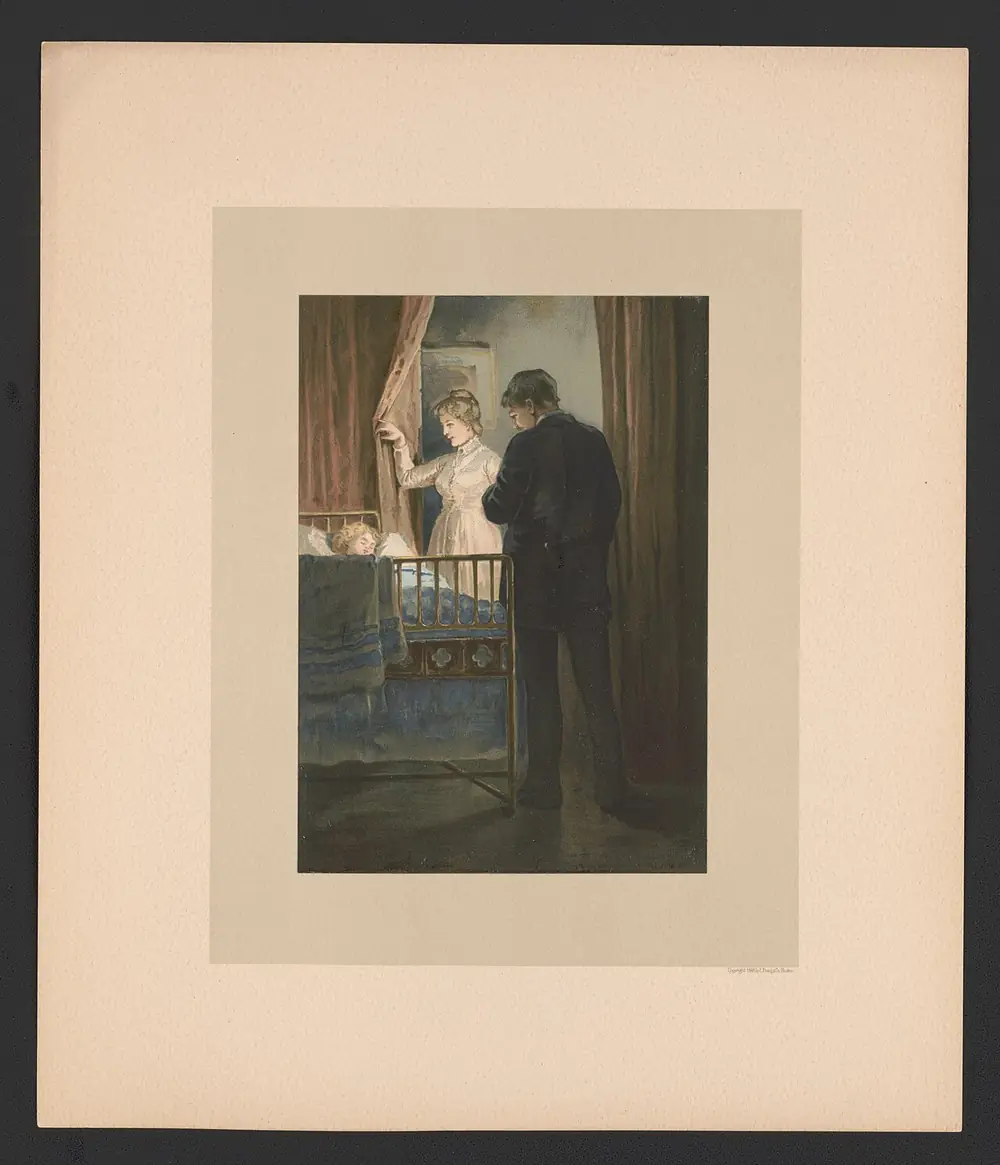
Children need short night prayers more than anyone, because their fears are real to them, even when they look small to us. A child who is afraid of the dark is not being silly. The dark is big and unknown to a small person, and a short prayer said together can make the room feel safe again. Teach your child one line they can say on their own: “God, you are with me. I am not alone.” Practice it together in the light, so they remember it in the dark. Pray with them in their room, in the dark, so they learn that God is present there too. Leave a small light on if it helps. Do not dismiss the fear. Name it, pray about it, and remind them every night that God neither slumbers nor sleeps, and that he is watching over them. As they grow older, the prayer can grow with them, but the short version will stay with them, and many adults still pray the prayer they learned as a child, because it was the first prayer that ever felt like theirs.
Some nights are hard nights, and a short prayer has to carry more than usual. There was an argument before bed. Someone is in the hospital. The news was bad today. The grief is fresh, or the anniversary of a loss has come around again. On those nights, do not try to force a cheerful prayer. Pray the truth, briefly: “Lord, today was hard. I am sad, and I am tired, and I need you.” That is a complete prayer, and God hears it, and it is enough to close a hard day. You do not need to have answers before you sleep. You only need to bring the truth, and to end the night the way David ended his psalm: in peace I will lie down and sleep, for you alone, Lord, make me dwell in safety. That ending is not a denial of the trouble. It is a declaration that the trouble does not get the last word. God does.
A Two-Minute Habit That Actually Sticks
The best short night prayer is the one you actually pray, and that means the habit has to be small enough to survive a tired night. Here is a two-minute pattern that works for most people, and you can shape it to your own life. Minute one: thank God for one thing from the day, and confess one thing you got wrong. Not ten things. One of each. “Thank you for the conversation with my friend. Forgive me for losing my temper in traffic.” That is enough. Minute two: hand God one worry, pray for one person by name, and say Psalm 4:8, or your one-line prayer, and close your eyes. That is the whole habit. Two minutes, three small moves, and you are done. Do it at the same time every night — after you brush your teeth, or once you are in bed, or when you turn off the lamp — and the time itself will start to remind you.
It also helps to keep the habit forgiving. Some nights you will forget. Some nights you will fall asleep mid-prayer, and that is fine. Falling asleep while you are praying is not a failure. It is a compliment, in a way — you fell asleep talking to God, the way a child falls asleep talking to a parent. Do not keep score. Do not feel guilty about the nights you miss. Simply start again the next night. The habit is built by returning, not by being perfect. Over weeks, the short prayer will become part of the night itself, like turning off the light or pulling up the covers, and you will find that you miss it on the nights you skip it. That is how you know it has taken root. And on the nights when you have more to say, say more. The short prayer is a door, not a wall. Walk through it whenever you are ready, and stay as long as you like. God is not in a hurry, and neither is the night.
Frequently Asked Questions

Is a short prayer enough, or do I need to pray longer at night?
A short prayer is enough. The Bible is full of short prayers that God answered immediately — Peter’s “Lord, save me,” the tax collector’s seven words, the thief’s one sentence. God is not impressed by length. He is moved by honesty. If you have more to say, say more, but never think a short prayer does not count.
Can I pray lying down in bed, or should I kneel?
You can pray lying down. The Bible shows people praying in every posture — standing, kneeling, sitting, lying down, and walking. God cares about your heart, not your position. If you are tired, lie down, close your eyes, and pray. Falling asleep while you pray is not disrespectful. It is rest, and God gave you rest as a gift.
What should I pray when I wake up at 3 a.m. and cannot sleep?
Pray one short line, slowly, and repeat it if the worry comes back: “Lord, you are awake, and I am awake, and I give you this worry, and I will sleep again.” Do not reach for your phone, and do not try to solve the problem in the dark. If you are still awake after twenty minutes, get up, read a psalm quietly, pray again, and return to bed.
How can I teach my child a short night prayer?
Teach them one line they can say on their own, like “God, you are with me. I am not alone.” Practice it together in the light, pray with them in their room in the dark, and leave a small light on if it helps. Do not dismiss their fear. Name it, pray about it, and remind them every night that God neither slumbers nor sleeps.
What if I fall asleep in the middle of my prayer?
That is fine. It happens to almost everyone, and God is not offended. Falling asleep while you are talking to him is like a child falling asleep talking to a parent — it is a sign of trust, not a failure. Simply start again the next night. The habit is built by returning, not by being perfect.
Related Prayers
If these short night prayers have helped you end the day in peace, these companion prayers can carry you further. For a longer prayer before sleep, a bedtime prayer offers gentle words for tired nights, and a night prayer covers the whole evening. When fear keeps you awake, a prayer before sleep for anxiety speaks directly to racing thoughts, and a night prayer for peaceful sleep offers longer help. When protection is what you need, a night prayer for protection asks for safety through the dark.

The Praytivo Editorial Team writes and curates Bible-based prayers, devotionals, and verse reflections to help you pray with confidence every day.