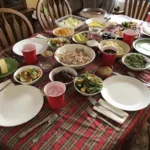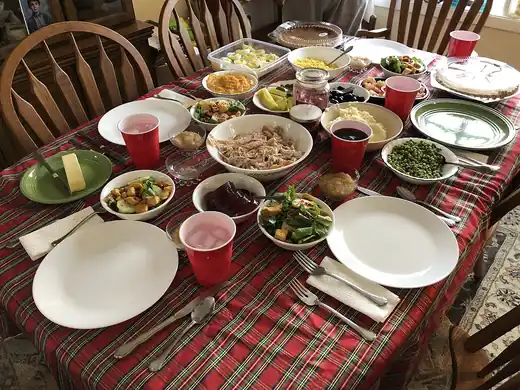
This Thanksgiving prayer is for the table. Not for a quiet morning alone, and not for a daily habit, but for the real Thanksgiving table, on Thursday, November 26, 2026, when the turkey is out of the oven, the dishes are crowded together, the chairs are full, and someone — maybe you — is about to be asked to say grace. The food is steaming. The children are already reaching for the rolls. Someone has traveled hours to be here, and someone else has been cooking since dawn, and the room is loud with the kind of noise that only happens when a whole family is finally under one roof again. And then there is a pause, and someone says, “Who wants to say grace?” and every eye turns, and you realize the pause is yours to fill. This article is for that moment. It has a full Thanksgiving prayer you can read aloud at the table, short graces for different kinds of tables, prayers for the people sitting around it, and honest help for the year behind you, including the hard parts of it, because gratitude at Thanksgiving is not about pretending the year was perfect. It is about naming what was good, even in a year that was not.
Thanksgiving is one of the few days in America when a whole family stops, sits down together, and says thank you out loud, and that is worth doing well. The prayer before the meal sets the tone for everything that follows. It tells the room that this food is a gift, that these people are a gift, and that the God who gave both is worth thanking, right here, before anyone takes a bite. You do not need a long prayer to do that. You need a true one, said in a clear voice, with the names and the details that make the people at the table look up and know that the prayer is about them, and about this year, and about this food, and not about some other family’s Thanksgiving. Pick the prayer in this article that fits your table, change a line or two to make it yours, and say it like you mean it. The table will be glad you did.
Why Grace Before the Meal Matters
Grace before the meal matters because it stops time, just for a minute, in the middle of a day that is always rushing. Thanksgiving Day is busy in a way that few other days are. There is cooking to finish, and a table to set, and guests arriving, and children underfoot, and a game on in the other room, and a dozen small jobs that all feel urgent. The meal itself can become one more task, something to get through, instead of something to receive. Grace stops that rush. It says, out loud, in front of everyone, that we are going to pause before we eat, and that the pause is part of the meal, not an interruption to it. That minute of quiet changes the whole room. The noise settles. The hands stop reaching. The eyes close, or look down, and for a moment the family is not doing anything except being together, and thanking God for it. That is a small miracle, and it is worth protecting.
It also matters because it names the truth about the food. The food on a Thanksgiving table did not appear by magic. Someone grew it, and someone bought it, and someone paid for it, and someone cooked it, and someone set the table, and all of those someones are worth thanking, but behind all of them is the God who gives the seed, and the rain, and the harvest, and the hands, and the home. Grace names that. It says that every good gift comes from above, and that the turkey and the pie and the full plates are not just a result of good shopping. They are a result of God’s provision, and of human work, and of a year in which, somehow, there was enough. Naming that out loud teaches the children at the table something they will carry for the rest of their lives: that food is a gift, and that gifts deserve thanks, and that thanks is something you say, not just something you feel.
And grace matters because it gathers the table. A Thanksgiving table is often a mixed table — old and young, near and far, people who agree and people who do not, people who have been here every year and people who are here for the first time. Grace is the one moment when all of those people are doing the same thing, together, in the same direction. It does not require everyone to believe the same thing in the same way. It only asks everyone to pause, and to listen, and to receive a blessing. A good Thanksgiving prayer is generous in that way. It thanks God, and it blesses the people, and it makes room for the guest who is new, and the child who is restless, and the relative who is far from home in their heart, even if they are sitting right here. That gathering is the real work of the prayer, and it is why the moment someone says “who will say grace” is worth taking seriously, and worth preparing for.
The Verse: Psalm 100:4

The verse that anchors this Thanksgiving prayer is one of the shortest and most joyful verses in the whole Bible, and it is worth reading slowly, even on a busy holiday, because it tells you exactly what to do when you come to God’s table. The psalmist wrote: “Enter into his gates with thanksgiving, into his courts with praise. Give thanks to him, and bless his name” (Psalm 100:4 WEB). Read that again, and notice the order. You do not enter with a request, or with a complaint, or with a list of things you still need. You enter with thanksgiving. You enter with praise. You give thanks, and you bless his name. That is the whole movement of the verse, and it is the whole movement of a Thanksgiving prayer. You come to the table, and you say thank you first, before anything else, because thank you is the right first word when you have been given as much as you have.
Psalm 100 is a psalm for the whole earth, and that matters, because it is not a private psalm for one person alone. It begins by calling all the lands to shout for joy to the Lord, and it ends by saying that his loving kindness endures forever, and his faithfulness to all generations. It is a psalm for a crowd, for a family, for a table full of people, and that is why it fits Thanksgiving so well. The gates and the courts in the verse are the gates and courts of the temple, the place where God’s people came together to worship, and the psalmist is telling them how to come in: with thanksgiving in their mouths, and praise in their hearts. Your dining room is not the temple, but the movement is the same. You gather the people you love, you come to the table God has provided, and you enter the meal the way the psalmist entered the courts — with thanks, and with praise, and with a blessing on God’s name.
“Give thanks to him, and bless his name” is the last line of the verse, and it is the simplest instruction in the whole Bible. Give thanks. Bless his name. You do not need fancy words to do either one. You need a true heart, and a clear voice, and a moment of quiet at a full table. When you say the Thanksgiving prayer in this article, you are doing exactly what the verse says: you are entering the meal with thanksgiving, and you are blessing God’s name in front of the people you love, and that blessing will outlast the meal, because the children will remember it, and the guests will carry it home, and the year will be better for it. That is what a verse can do when it is prayed at a table. It turns a meal into worship, and a family into a congregation, for one minute, before the first bite.
A Thanksgiving Prayer for the Table

Heavenly Father, we come to this table with thankful hearts, and we pause before we eat to say what we mean: thank you. Thank you for this food, for the hands that grew it, and the hands that cooked it, and the hands that set this table. Thank you for this home, and for the roof over it, and for the warmth in it, and for the people in it, who traveled far and worked hard to be here today. Thank you for the year behind us — for the good in it, for the hard in it, and for your presence in all of it, even when we did not see it. You have carried us through this year, Lord, and we are here, together, because of you.
Bless this meal, Lord, and bless the people who share it. Bless the children at this table, and the parents, and the grandparents, and the guests who are here for the first time, and the ones who are far away and in our thoughts today. Bless the hands that made this food, and bless the conversation that will fill this room. Keep our words kind, and our hearts soft toward one another, and our laughter easy. Where there is hurt at this table, bring healing. Where there is an empty chair, bring comfort. Where there is plenty, make us generous, and remind us of those who have less today, and show us how to share what we have been given.
We give you thanks, Lord, and we bless your name, for you are good, and your loving kindness endures forever, and your faithfulness reaches to every generation. May this meal nourish our bodies, and may this time together nourish our love for one another, and may the gratitude we feel today stay with us in the ordinary days that follow. In the name of Jesus, who broke bread with his friends and gave thanks, amen.
Read that prayer aloud once before Thanksgiving Day, so the words are familiar when the moment comes. You do not have to memorize it. You can read it from your phone, or from a printed page, or from this article, open on the kitchen counter. No one at the table will mind. What they will remember is not whether you read it or said it from memory. What they will remember is that someone took the moment seriously, and said thank you, clearly, in a voice they could hear, and that the meal began with God in it. If a line does not fit your table, change it. If a name belongs in it, add the name. If a person at the table has a need you know about, name it gently, in your own words. This prayer is a beginning, not a script, and God listens to the beginning just as carefully as he listens to the finished version. Say it slowly, and let the room be quiet for a moment after the amen, before the plates start moving.
Short Graces for Different Tables
Not every table needs the long prayer, and a short grace, said well, can be just as good as a long one. Here are short graces for the tables that come up most often, and you can use them exactly as written, or change a word or two to make them yours. Keep them in mind before the meal, so that when someone says “who will say grace,” you have words ready, and you do not have to think on your feet while everyone is waiting and the food is getting cold. The point is not the length. The point is the thanks, said clearly, before the first bite.
For a big family table, full of noise and laughter, say this: “Lord, thank you for this food, for this family, and for this day together. Bless every hand that made this meal, and every heart gathered here. Amen.” That is a complete grace, and it names the three things that matter most: the food, the family, and the day. Say it in a clear voice, and do not rush it, even if the children are restless. For a small table, with just a few people, say this: “Father, we are few, but we are grateful. Thank you for this meal, and for each other, and for the year that brought us here. Amen.” Small tables deserve a grace that is just as warm as a big one, and this one names the gift of being together, even when the gathering is small.
For a table with young children, say this, and let the children join in on the last line: “Thank you, God, for the food, for our family, and for today. Bless us, and help us to share. Amen.” Children like a prayer they can say with you, and this one is short enough for them to learn in one hearing, and true enough to mean something. For a table where someone is missing, say this: “Lord, thank you for this food, and for the people at this table, and for the one we miss today. Comfort us, and hold them, wherever they are. Amen.” That grace names the empty chair without making the meal sad, and it lets the grief sit at the table alongside the thanks, which is where it belongs on Thanksgiving. For a table with guests who are new, say this: “God, thank you for this food, and for new friends at our table. May every guest here feel like family. Amen.” That is a welcome and a grace in one sentence, and it tells the guest, right away, that they belong here.
Prayers for the People at the Table

A Thanksgiving table is a room full of stories, and the prayer can name them, gently, without turning into a speech. The children have a story. The grandparents have a story. The guests have a story. The person who traveled the furthest has a story. The person who cooked all day has a story. A good Thanksgiving prayer does not try to tell all of those stories. It names the people, and it blesses them, and it lets the details live in the silence after the amen, where everyone knows what is meant. Start with the children, because they are the future of the table, and because they are listening more carefully than you think. Thank God for them by name if you can, and ask him to bless their health, and their learning, and their joy, and to keep them safe in the year ahead. Children who hear their names in a prayer remember it, and they carry it with them long after the meal is over.
Then bless the elders, the parents and grandparents who built the table you are sitting at, and who taught you to say thank you in the first place. Thank God for their years, and for their work, and for their wisdom, and ask him to give them strength, and rest, and peace, and the knowledge that they are loved and honored. If a grandparent is no longer with you, name them, quietly, in your heart, or out loud if the table can hold it, and thank God for the years you had with them, and for the faith they passed down. That kind of naming is not sad. It is grateful, and it tells the younger people at the table that love does not end when a life ends, and that gratitude can hold both joy and sorrow at the same time.
Bless the guests, too, especially the ones who are far from their own families today. A guest at Thanksgiving is someone who trusted you with their holiday, and that trust deserves a prayer. Thank God for them, and ask him to make them feel at home, and to bless the family they are missing, and to give them a day they will remember warmly. And bless the cook, by name, because the cook is often the person who worked the hardest and gets thanked the least. Say it out loud: “Thank you, Lord, for the hands that made this food.” The cook will hear it, and the table will hear it, and the meal will taste better for it. That is not a small thing. It is the whole point of grace: to name the gift, and the giver, and the hands in between, before anyone eats.
Giving Thanks for the Year Behind You
Thanksgiving is not only about the food on the table. It is about the year behind you, and that year deserves a real look, not a quick one, because a year is a long time, and it holds more than you remember when you are standing in a busy kitchen. Take a minute, before the meal or after it, to think about the year honestly. What was good in it? A new baby, a new job, a move, a recovery, a friendship, a quiet ordinary stretch when nothing went wrong and that itself was the gift. Write those things down, or name them out loud at the table, one by one, and let the room hear them. Specific thanks is stronger than general thanks. “Thank you for the year” is a good sentence. “Thank you for my daughter’s recovery, and for the job that came through in March, and for the move that finally felt like home” is a better one, because it knows exactly what it is thanking God for, and the people at the table know it too.
And if the year was hard, say that too, because gratitude at Thanksgiving is not about pretending the year was perfect. Some years bring loss, and illness, and money trouble, and broken relationships, and a Thanksgiving prayer that ignores all of that feels false, and the people at the table know it. You can thank God in a hard year, and the thanks is real, but it sounds different. It sounds like this: “Thank you, Lord, that we are still here. Thank you that we made it through. Thank you for the people who helped us, and for the strength we did not know we had, and for the small good things that kept us going.” That is a true prayer, and it is a brave one, and it honors the year as it actually was, instead of as you wish it had been. If there is an empty chair this year, name the person, and thank God for their life, and ask him to comfort the people who miss them most. Grief and gratitude can sit at the same table, and on Thanksgiving they often do, and the prayer that makes room for both is the one the table will remember.
It also helps to look back at the year the way Psalm 77 looks back, by remembering God’s work in it. Where was God present this year, even in the hard parts? In the phone call that came at the right moment. In the friend who showed up. In the doctor who listened. In the money that stretched further than it should have. In the strength to get through a day you thought you could not get through. Those are the small works of God, and they are easy to forget, because they do not look like miracles. They look like ordinary life. But ordinary life, held together for a whole year, is itself a gift, and Thanksgiving is the day to name it. Before the meal, ask each person at the table to name one thing from the year they are thankful for, and go around the room, one by one. It takes five minutes, and it changes the meal, because it turns the prayer from one person’s words into the whole table’s thanks.
How to Lead Grace When You Are Asked
If you are the person who gets asked to say grace, and you were not expecting it, do not panic. You do not need a perfect prayer. You need a clear voice, a short prayer, and a calm minute. Stand up, or stay seated, whichever the table expects, and say, “Let us pray,” and then pause for a second, so the room settles. Then say the prayer, slowly, in your own voice, and do not rush it. If you forget a line, keep going. No one will mind. If your voice shakes, keep going anyway. A shaking voice saying a true prayer is better than a smooth voice saying a practiced one. End with a clear amen, and then let the room be quiet for a beat before the plates start moving. That beat of quiet is part of the prayer, and it tells the table that something real just happened.
If there are children at the table, let them take part. Ask a child to read a short grace, or to say one line of thanks, or to name one thing they are thankful for before you begin. Children who are included in grace learn that prayer is for them, not just for the adults, and they will remember the Thanksgiving when they got to say the prayer. Keep their part short, and help them if they get stuck, and praise them after, simply and warmly. If the table includes guests of mixed faith, or guests who do not share your faith, keep the prayer generous and simple. Thank God, bless the food, bless the people, and do not use the moment to make a point. A grace that welcomes everyone is a grace that honors God, and it tells the guest, without a speech, that they are safe at your table. And if you are a guest, and you are asked to say grace in someone else’s home, say yes, and keep it short, and thank the host by name. That is a gift to the host, and to the table, and it will be remembered.
It also helps to prepare, just a little, before the day. Read the long prayer in this article once, the night before, and pick the short grace that fits your table, and keep it in your pocket, or on your phone, so you have words ready. Tell the host, if you are the host, who will say grace, so no one is caught by surprise. And if you are not the host, and you think you might be asked, read the prayer once before you go, so the words are familiar. Preparation is not the opposite of sincerity. It is how sincerity gets a chance to speak clearly, in a noisy room, with the food getting cold, and everyone watching. A prepared prayer, said with a true heart, is the best kind of grace there is.
After the Meal: Keeping Gratitude Going

The meal ends, and the plates are cleared, and the pie is served, and the room settles into the slow, happy part of the day, and it is tempting to think that the gratitude is done, because the prayer has been said. But gratitude is not only a moment before the meal. It is a habit, and Thanksgiving Day is a good day to start one, because the table has already shown you how good it feels to say thank you out loud. Before the guests leave, take a minute to thank the cook, by name, and thank the host, and thank the people who traveled, and thank the people who cleaned up. Those small thanks are the grace after the meal, and they matter as much as the grace before it, because they tell the people who worked the hardest that their work was seen, and loved.
And in the days after Thanksgiving, keep the thanks going in a small way. Write down one thing from the day that you are grateful for, and keep doing it for a week, or for the rest of the year. Send a note to someone who was at the table, thanking them for being there. Call the person who could not come, and tell them they were missed, and that you thought of them. Those small acts are the real fruit of a Thanksgiving prayer, because they take the gratitude off the table and into the ordinary days that follow, and ordinary days are where gratitude matters most. A Thanksgiving prayer that only lives for one minute before one meal is a good prayer. A Thanksgiving prayer that changes how you speak to the people you love, for the rest of the year, is a better one, and it starts with the same words: thank you, Lord, and bless your name.
Frequently Asked Questions
Who should say grace at Thanksgiving dinner? Anyone can say grace — the host, a parent, a grandparent, a guest, or a child. It is kind to decide before the meal, so no one is caught by surprise. If you are asked with no warning, say yes, keep it short, and speak clearly. A short, true prayer is always enough.
What do I say if I am asked to say grace with no warning? Say, “Let us pray,” pause for a second, and then use one of the short graces in this article — for example, “Lord, thank you for this food, for this family, and for this day together. Bless every hand that made this meal, and every heart gathered here. Amen.” You do not need to make it up on the spot.
How can I include children in the Thanksgiving prayer? Let a child read a short grace, say one line of thanks, or name one thing they are thankful for before you begin. Keep their part short, help them if they get stuck, and praise them warmly after. Children who take part learn that prayer is for them too.
What if our table includes guests of different faiths, or no faith? Keep the prayer generous and simple: thank God, bless the food, and bless the people at the table. Do not use grace to make a point. A prayer that welcomes everyone honors God, and it tells every guest that they are safe and welcome at your table.
What if this year was hard, or someone we love is missing from the table? Name it gently in the prayer, and thank God honestly — for the strength to get through the year, for the people who helped, and for the life of the person you miss. Grief and gratitude can sit at the same table, and a prayer that makes room for both is the one the table will remember.
Related Prayers
If this Thanksgiving prayer has blessed your table, these companion prayers can carry you further. For thanks as a daily habit, a daily prayer of thanksgiving keeps gratitude going after the holiday, and a morning prayer of gratitude starts each day with thanks. When the family gathers, a prayer for family unity asks for peace at the table, and a prayer for my children blesses the youngest ones there. For a milestone worth celebrating at the table, a birthday prayer for a loved one gives thanks for another year of life.

The Praytivo Editorial Team writes and curates Bible-based prayers, devotionals, and verse reflections to help you pray with confidence every day.