Saturday arrives like a deep breath after a long run. The week’s deadlines are behind you, the alarms are quiet, and for a moment the whole house seems to exhale. Yet the breath does not always bring relief. Sometimes you wake on Saturday still tired in a way sleep did not fix, still carrying conversations you replay, work you did not finish, and a list that did not get shorter just because Friday came. That is precisely why this prayer matters. It is not another task to complete before the weekend can begin. It is a way to put the week down, on purpose, and to receive this day as it is — unfinished, ordinary, and still a gift from God.
Most of us believe easily that God wants us to work hard. We believe far less easily that He also wants us to stop. We live as if rest is what you earn after everything is done, and since everything is never done, rest keeps getting postponed until we collapse into it. Saturday pushes back against that story. It comes whether the house is clean or not, whether the inbox is empty or not, whether you feel spiritual or not, and it says: this day was made before you achieved anything in it. That is the starting point for prayer today. Not productivity, not self-improvement, just the stubborn grace that God built rest into the rhythm of life and invites you into it rather than asking you to invent it yourself.
This page is for every kind of Saturday. It is for the slow morning with coffee and quiet, and it is just as much for the nurse starting a long shift, the parent already making breakfast for a full house, the shop worker facing the busiest day of the week, and the person whose Saturday is errands from dawn to dusk. If your Saturday looks nothing like a retreat, you are not doing it wrong. Rest in the Bible is bigger than sleeping in. It is a posture of trust — trusting God with the hours you have, whether those hours are quiet or crowded. What follows is a prayer to pray slowly, Scripture to sit with, and a rhythm for the day that leaves room for real life.
Rest Is God’s Idea

At the very beginning of the story, God made the world in six days, called it good, and then rested on the seventh day. Not because He was worn out. Not because He ran out of strength. He rested because the work was finished and it was good, and finishing well deserves a pause. Rest did not begin as a reward for tired people. It began as part of the design, woven in before anyone had burned out or failed. That changes how we think about Saturday. A day of rest is not God grudgingly allowing you a break from a life He really wants to be all work. It is God showing you, from the first pages of Scripture, that rest belongs in a good life.
“And on the seventh day God finished his work which he had made; and he rested on the seventh day from all his work which he had made. And God blessed the seventh day, and sanctified it: because that in it he rested from all his work which God had created and made.” That is Genesis 2:2-3, and it carries two ideas to hold all day. First, God blessed the day of rest — He set it apart as good in itself, not merely useful for getting more work done later. Second, rest follows completion, not collapse. God did not rest because He could not go on. He rested because He could look at what He had made and say, this is enough for now. Our version usually runs the other way round: we rest only when we drop, and then we wonder why rest feels like failure instead of blessing.
So to pray on Saturday is to step into a pattern older than your to-do list. Rest is trust. It is saying, “Lord, the world will keep turning without my constant attention, my worth is not measured by what I finish today, and You are still God when I put things down.” That trust can feel uncomfortable when you are used to holding everything together. Discomfort, though, is not disobedience. Sometimes the most faithful thing on a Saturday is to stop striving for an hour and let God be God without your help. Psalm 118:24 gives the day its glad note: “This is the day which the LORD has made. We will rejoice and be glad in it.” Rejoicing here is not forced cheerfulness or pretending the week was perfect. It is the quiet decision to notice that this day, with all its ordinariness, is made by God and therefore worth receiving with thanks. Rest, renewal, rejoicing — those three movements belong together, and Saturday holds space for all three.
A Saturday Prayer to Pray Slowly

Pray this aloud if you can, and slow down wherever a line touches something tender. There is no hurry in this prayer and no grade at the end of it. You can also pray it in pieces through the day — a paragraph in the morning, a paragraph on a walk, a paragraph before bed.
Heavenly Father, thank You for this Saturday — for a morning without rushing and a day shaped by Your rest, not my striving. Thank You for carrying me through this week, through the parts I handled well and the parts I fumbled, through conversations I am proud of and ones I wish I could redo. I lay the whole week at Your feet now: the unfinished work, the worries I carried to bed, the tiredness that sleep alone has not lifted, and the hopes I have not yet found words for.
Teach me to rest the way You rested — not because I have earned it, but because You made rest holy. Quiet the voice that tells me I am only valuable when I am busy. Show me what “off” looks like today, in my actual life: the phone put down for a while, the list left unfinished without shame, a walk, a meal eaten slowly, a few quiet minutes with You before the day fills up. Renew my strength, Lord, with steady, deep strength that lets me walk and not faint, and refresh my soul the way a shepherd restores his sheep beside still waters.
Bless the people under this roof and the people I love who are far away. Give peace to our home, patience to our conversations, and laughter somewhere in this day, even if it is small and unexpected. If this Saturday is busy, be present in the busyness. If it is quiet, fill the quiet with Your presence. If it is lonely, sit close to me in it. Help me notice one person to bless today — with a word, a message, a meal, or simply by being fully present — and help me receive blessing too, without feeling I must earn it first. Prepare my heart gently for Sunday, without turning today into a rehearsal, and let this Saturday be a hinge, not a hurdle: rest that restores, honesty that heals, and joy that does not depend on everything going perfectly. In Jesus’ name, amen.
If that prayer felt long, that is on purpose. Saturday is the one day when prayer does not have to be squeezed between other things. The point is not to finish the prayer but to let the prayer finish something in you: the hurry, the self-criticism, the feeling that you must hold the whole week together by yourself.
When Rest Feels Guilty
For many people the hardest thing about Saturday is not finding time to rest. It is allowing yourself to rest without guilt. You sit down and hear the laundry calling. You take a walk and mentally rehearse everything you should be doing instead. You sleep a little longer and wake up apologizing to no one in particular. That guilt does not always sound religious. Sometimes it sounds practical — “There is too much to do.” Sometimes it sounds like comparison — “Other people manage all this.” Sometimes it sounds like identity — “If I am not useful, what am I?” Whatever its voice, guilt turns rest into another performance, and performed rest restores nobody.
Jesus answers that voice more gently than we answer ourselves: “Come to me, all you who labor and are heavily burdened, and I will give you rest” (Matthew 11:28, WEB). Notice who He invites — not people who have finished everything, but people who labor and are heavily burdened, which is to say, people exactly like you on a Saturday morning with a list and a tired body. His rest is not a prize at the end of a perfect week. It is an invitation in the middle of an imperfect one. Psalm 23 says the same thing in shepherd language: He “makes me lie down in green pastures” and “leads me beside the still waters” before He “restores my soul” (Psalm 23:2-3, KJV). Lying down comes first. Restoration follows. We tend to reverse the order, demanding to feel restored before we permit ourselves to lie down, and then wondering why we never feel restored.
Try a practical test. Decide before the day starts what “off” looks like for you, in one sentence you can actually keep. Not “I will do nothing all day,” which will collapse by lunchtime, but something like: “I will not check work email until Monday,” or “I will leave the spare room until next week without calling that failure,” or “I will take one hour with no phone and no chores.” When guilt taps you during that hour, you have an answer ready: this is not laziness; this is the hour set apart, and God is not disappointed by it. Rest without guilt is not rest without responsibility — the laundry and the emails will still be there. It is rest without the lie that your value depends on clearing them today.
When Saturday Is Not a Day Off
Now for the Saturdays that do not look like the pictures. God is not only present on quiet Saturdays. He is present on loud, full, tiring ones too, and rest on those days looks different — smaller, more hidden, but no less real.
If you work on Saturdays
For nurses, shop assistants, delivery drivers, hospitality staff, farmers, caregivers, and everyone whose weekend is someone else’s busiest day, Saturday rest cannot mean staying home. It has to mean something you can carry into work: a prayer before the shift, a verse held in mind between tasks, a moment of gratitude for the people you serve, a boundary around what you will not carry home. Pray for the shift itself — for patience with difficult customers or patients, for safety on the road or the ward, for colleagues who are also tired, and for grace to do honest work without letting work define you. Your rest may come in a later hour, a later day, or a ten-minute pause with coffee and a closed door. That pause counts. God does not measure rest by the calendar alone; He measures it by trust. If you hand Him the shift, the tired feet, and the worry about next week, you have rested in the sense that matters most, even while you are still on your feet.
If your house is full
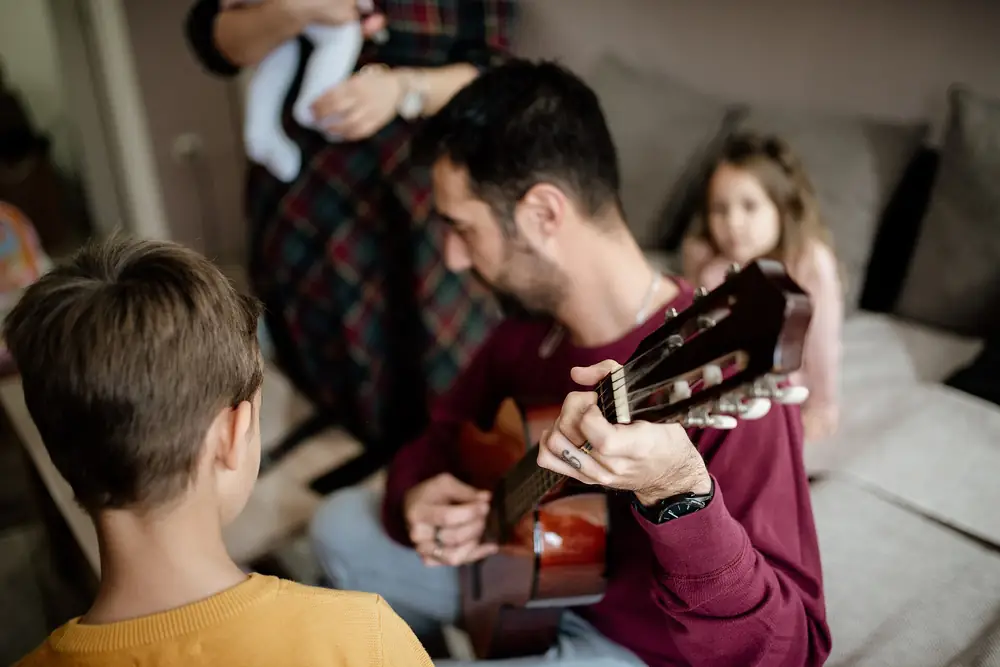
Parents know a particular Saturday tiredness. The children are home, there are games and parties and homework and meals, someone always needs something, and by mid-afternoon you wonder where the day of rest went. Caring for a family on Saturday is real work, and it is holy work, even when it is noisy and repetitive. Rest for a parent is rarely solitude. More often it is a small pocket of peace inside a full day — five minutes alone with tea before everyone wakes, a walk where you are not solving anything, a meal where phones stay in another room and nobody is performing happiness for a photograph. Pray for your household by name today: for patience that does not run out by lunchtime, for the child who is struggling quietly, for your own need to be more than a service station for other people. And if you can, let someone else help, even imperfectly. Accepting help is not failure. It is how a family rests together instead of one person collapsing so everyone else can relax.
If Saturday is chores and errands
Then there is the Saturday that is really a second job: the supermarket, the laundry, the garden, the car, the bills, the cleaning that never stays done. It is easy to resent that kind of Saturday and to feel that God is somewhere else while you fold towels. He is not. Try a small experiment: pick one errand and do it as a prayer walk. Notice people. Be kind to the cashier. Leave a little margin so you are not rushing from task to task with your jaw clenched. And choose one thing on the list to leave undone, deliberately, as a sign that the list is not your master. The house will not fall down. What you are practicing is not neglect; it is freedom. A Saturday that includes chores can still include rest, if rest is understood as trust rather than idleness — the trust that God holds what you cannot finish, and that a home is for living in, not only for keeping perfect.
If Saturday feels lonely

Some Saturdays are lonely, and loneliness on a day built for rest can sting more than on a busy weekday, because everyone else seems to be enjoying company you do not have. If that is your Saturday — an empty house, a phone that stays quiet, a weekend that stretches out without plans — do not treat the loneliness as proof that you have failed at rest. Bring it to God directly: Lord, this Saturday feels empty, and I do not want to pretend otherwise. Sit close to me in it. Give me one small good thing today — a walk, a kind word, a moment of beauty — and one person to reach out to, even if it is only a short message. Remind me that I am not forgotten, and that rest can still belong to me even when I rest alone. Amen. Then send one message yourself, to someone who might also be glad to hear from you. Loneliness shared honestly often shrinks the moment it is spoken, and a Saturday spent reaching out is a Saturday well spent.
Make This Saturday Count — A Slower Rhythm for Today
You do not need a perfect Saturday plan. You need a rhythm loose enough to survive interruptions, because Saturday will interrupt whatever you plan. Think of the day in three small movements. In the morning, before the phone takes over, take five unhurried minutes: the prayer above, or just its first paragraph, and one verse read twice. Ask simply, “Lord, what does this day need from me, and what do I need to hand back to You?” At midday, take one real pause. Step outside for a few minutes. Eat sitting down rather than standing at the counter. Do one kindness that costs little — a text to someone who had a hard week, a plate of food for a neighbor, a genuine word to a colleague. And leave one thing undone on purpose. That deliberate incompleteness teaches your heart, in a way words alone cannot, that the world does not depend on your finishing everything today.
In the evening, before the day dissolves into screens, take another five minutes and ask three questions, gently: What was good today? What was hard? What do I want to hand to God before I sleep? You do not need to fix the hard parts tonight. Naming them and handing them over is the prayer. This is also the old “make this Saturday count” idea, made concrete: look back over the week, choose one thing that restores you, choose one thing that blesses someone else, and choose one thing that draws you closer to God. One restoring thing, one blessing, one step — not a long list of self-improvements you will abandon by Wednesday. If you do nothing else today but those three pauses — morning, midday, evening — you will have prayed the day, not merely prayed about it.
Looking Back Without Grading Yourself
Saturday is a natural moment to look back over the week, and looking back is valuable if you do it without turning it into a report card. A report card asks, “Did I do enough? Did I fail?” A prayerful review asks, “Where was God this week, even when I was busy? What am I grateful for? What do I need to let go of?” Monday may have started well and then unraveled; Tuesday may have held a conversation you are still thinking about; Thursday may have been heavier than you admitted; Friday may have ended in relief mixed with exhaustion. If you prayed through the week, you already have a thread to follow: Monday’s prayer for a fresh start, Tuesday’s prayer for strength in the middle of things, Thursday’s prayer for perseverance, and Friday’s prayer for finishing the week with thanks each name a different kind of day, and Saturday gathers them up without re-grading them. If you did not pray every day — most people did not — Saturday is not a catch-up exam. It is a place to begin again, and one honest sentence to God about the week is worth more than a perfect streak performed without meaning it. If today is simply a day to be present, today’s prayer can help you stay in this day rather than living already in next week.
Notice, too, what restored you in small doses, so you can choose more of it rather than more of what drained you. Was it the walk, the meal with a friend, the hour without notifications, the song that steadied you on the drive? Name one restoring thing and protect a version of it next week. Name one thing that blessed someone else, even if it felt tiny, because rejoicing includes noticing the good you were part of, not only the good you received. Then name one thing that draws you closer to God and make a small, specific plan for it — a verse to carry, a prayer to repeat, a habit to keep for one week. Saturday review works best when it ends in one doable next step.
Saturday Prepares, Sunday Worships
Be clear about what Saturday is not. It is not Sunday moved a day early. Sunday is the Lord’s Day for most Christians — a day of gathering, worship, hearing the Word together, and remembering the resurrection. Saturday does not replace that, and it should not try to. What Saturday can do, quietly, is prepare the heart for Sunday without stealing Saturday’s own gift of rest. Preparation here is gentle, not frantic: laying out what you need for the morning, settling a disagreement before it follows you into worship, choosing to forgive a small hurt rather than carrying it into the pew, reading a psalm in the evening that will still be echoing when you sing the next day. If you worship on Sunday, pray in the evening for the service, for those who will preach and lead, and for your own heart to be open rather than critical or distracted. If your worship day falls on a different day, the principle still holds: rest prepares worship, and worship gives rest its direction. Saturday is the hinge between the week that was and the worship that is coming, and a hinge does its work quietly. It does not need to be the door.

Blessings You Can Send
Saturday blessings are meant to be shared, and a short, sincere message can steady someone’s whole weekend. Send one to someone who had a hard week, not only to someone already doing well. “Happy Saturday. I hope today gives you real rest — not just a break from work, but peace for your heart too. You are in my prayers.” Or: “May this Saturday be kind to you. May you find a quiet moment, a good meal, and a reason to smile, and may God renew your strength for the week ahead.” Or, for a friend who works weekends: “I know Saturday is a workday for you. I am praying your shift is steady, your customers are kind, and you find a pocket of peace in the middle of it all.” Or, simply: “This is the day the Lord has made — I hope you feel that today, even in the ordinary parts.” The best blessing is the one that sounds like you, mentions something true about the other person’s life, and does not try too hard to be poetic. Send it, then let it go. You do not need a reply to know it mattered.
Frequently Asked Questions About Saturday Prayer
What is a good Saturday morning prayer?
A good Saturday morning prayer is short enough to pray before the day fills up and honest enough to name the week you actually had. Thank God for the day, hand Him the unfinished work and the tiredness, ask for rest that restores body and mind, and ask for one way to bless someone else today. The long prayer in this article works well if you have ten minutes; its first paragraph alone works well if you have two. Either way, the measure is not length but honesty — a prayer that sounds like your Saturday, not someone else’s ideal one.
What Bible verse is good for Saturday?
Genesis 2:2-3 is the natural anchor, because it shows God blessing and setting apart a day of rest at the very beginning of the story. Psalm 118:24 is the glad companion verse: “This is the day which the LORD has made. We will rejoice and be glad in it.” For tired readers, add Matthew 11:28, where Jesus invites the weary to come to Him for rest, and Isaiah 40:31, where those who hope in the Lord renew their strength. Read one verse slowly rather than collecting many verses quickly; let the words settle before you move on.
How can I rest well when my Saturday is busy?
Redefine rest as trust in small pockets, not only as a free day. Pray before a shift, take one real pause at midday, eat sitting down, leave one chore undone on purpose, and protect one hour — or even thirty minutes — with no phone and no tasks. Tell someone what “off” means for you today so it is real. Rest on a busy Saturday is not about doing nothing; it is about refusing to let the day own you completely, and handing its pressures to God in the moments you do have.
Is Saturday the Sabbath?
In the Old Testament, the seventh day — Saturday — was the Sabbath, a day of rest commanded in Exodus 20:8-11: “Remember the sabbath day, to keep it holy.” Many Christians today worship on Sunday, the day of Christ’s resurrection, while still honoring the Sabbath principle of regular rest. This article is non-denominational: it does not argue for one observance over another, and it does not treat Saturday rest as a legalistic rule. Whatever day you gather for worship, the gift of a rhythm that includes rest, trust, and delight belongs to you, and Saturday is a fitting day to practice it.
How is a Saturday prayer different from a Sunday prayer?
A Sunday prayer centers on worship, gathering, and the risen Lord; a Saturday prayer centers on rest, honest review, and gentle preparation. Saturday looks backward at the week and inward at your need for renewal; Sunday looks upward in praise and outward to the church family. They complement each other. Saturday without Sunday can drift into mere relaxation; Sunday without Saturday’s rest can arrive with a heart too tired to worship. Praying both, in their own ways, keeps the weekend whole.
What should I pray when I feel guilty for resting?
Name the guilt out loud to God, rather than arguing with it alone in your head. Try: “Lord, I feel guilty for stopping while so much is undone. Help me believe that my worth is not in what I finish, and that rest is Your gift, not my reward.” Then keep the boundary you set — the hour, the phone-free meal, the unfinished task left on purpose — and let the feeling pass without obeying it. If guilt persists week after week, it may be worth talking about with a trusted friend, pastor, or counselor, because chronic guilt about rest sometimes points to deeper exhaustion that prayer, while essential, is not meant to carry by itself.
Saturday will end, as Saturdays do, whether you used it perfectly or not. The laundry may still be there. The list may still be long. Sunday will come with its own gifts, and Monday will come with its own demands. But something can be different because you prayed today: you can carry into the rest of the weekend the knowledge that rest is not something you stole from a busy life, but something God built into life from the beginning. So take the evening slowly if you can. Eat well. Rest well. Notice one good thing before you sleep, and let that be enough. May your Saturday be blessed with deep rest, quiet renewal, and a joy that does not depend on everything being finished — and may that rest prepare you, gently, for worship and for the week ahead, in God’s goodness and grace.

The Praytivo Editorial Team writes and curates Bible-based prayers, devotionals, and verse reflections to help you pray with confidence every day.