Some seasons of life do not ask for a little strength — they demand more strength than you have. A long illness, a hard job, a family crisis, grief that will not lift. If you are running on empty today, this prayer for strength is for you. God’s strength does not begin where your effort ends; it begins where your honesty begins. If your hard season has stretched on for weeks, keep going with this prayer for strength in hard times.
There is a particular kind of tired that sleep does not fix. You wake up after eight hours and still feel heavy. You sit in the car before work and have to talk yourself into opening the door. You love your family, you believe in God, you are doing your best — and it still feels like too much. If that is where you are, hear this plainly first: you are not weak in the way the world means it. You are worn. And worn is not the same as faithless. Strength rarely arrives as a sudden surge. Most of the time, God gives something quieter and much more useful: enough for the next step. Not the whole staircase. Not the whole month. Just the next honest step, taken with Him beside you.
A Prayer for Strength
Almighty God, I come to You honestly: I am tired, and what is in front of me feels bigger than what is inside me. I have tried to push through, and I have tried to smile through it, and neither one has worked for very long. So here is the truth — I need You. But You are the God who never grows weary, and You promised strength to those who wait on You. Renew my strength today, Lord. Strengthen my body, steady my mind, and hold my heart together. Give me courage for the conversation I am dreading, patience for the person who needs me, and grace for myself when I get it wrong. Help me take the next step — not the whole staircase, just the next step — trusting that You will meet me there. When I cannot see the way forward, be the light for the step I am on. Be my strength when I have none, my rest when I cannot sleep, and my hope when the day feels long. In Jesus’ name, Amen.

The Promise for the Weary
“But those who wait for the Lord will renew their strength. They will mount up with wings like eagles. They will run, and not be weary. They will walk, and not faint.” — Isaiah 40:31 (WEB). Notice the order: mounting, running, walking. Some days strength looks like soaring; most days it looks like walking and not fainting. Both are miracles. Both count.
That promise was written to exhausted people who felt forgotten, not to people who already felt strong. Just before it, Isaiah says, “He gives power to the faint, and to him who has no might he increases strength” (Isaiah 40:29, WEB). God does not only renew the strong. He starts with the faint, with the person who has no might left. If that is you, you are not outside the promise. You are exactly who it was written for. Waiting on the Lord, in Isaiah’s sense, is not passive sitting and hoping things improve. It is holding fast to God while you do the next small faithful thing — making the phone call, cooking the meal, showing up for work, forgiving one more time — even when you cannot see the outcome yet.
Weakness Is Not the Opposite of Faith
Many of us picked up the idea that a strong Christian never feels weak — that if we just believed more or tried a little longer, the tiredness would lift. It is a cruel idea, and it is not in the Bible. Elijah sat under a tree and asked God to let him die. David wrote psalms that sound less like victory songs and more like late-night honesty. Paul talked openly about a thorn he could not remove and a grace that had to be enough. None of them were scolded for admitting it. They were met there.
The first step toward real strength is often not trying harder. It is telling the truth. “Lord, I am tired” is a complete prayer. “I cannot do this alone” is not a failure of faith; it is the beginning of it. When Paul wrote that God’s power is made perfect in weakness, he was not giving us a slogan. He was describing a lived reality: the places where we run out are exactly the places where God does His most honest work in us. You do not have to perform strength here. You can sit down, breathe, and let God be strong in the direction you cannot be strong right now. That is not giving up. Giving up says, “Nothing matters, so I will stop.” This says, “I matter to God, so I will keep going, but I will keep going held, not alone.”
Three Kinds of Tired, and Why They Need Different Prayers
Not all tiredness is the same, and praying as if it were can leave you feeling unheard. A body that has not slept is not fixed by a pep talk. A mind that will not stop replaying a worry is not fixed by a nap. A heart that is grieving is not fixed by a to-do list. Naming which kind you carry today helps, because God meets each one a little differently.
Body tired comes from illness, from caregiving through the night, from physical work, from a body that is healing or aging or simply worn down by a long season. For this tiredness, strength often looks unglamorous: a meal eaten slowly, water, a walk around the block, a doctor’s appointment you finally book, an afternoon where you actually rest instead of scrolling through rest. Pray for your body specifically. Name the ache, the exhaustion, the part of you that hurts. God made your body; He is not embarrassed by its limits. “Lord, strengthen this body. Give me sleep tonight that actually restores me. Give the medicine and the treatment time to work. And give me the wisdom to stop treating rest as laziness.” That is a holy prayer.
Mind tired is decision fatigue and worry on a loop at 2 a.m. — money, a child, a job, a relationship, a future you cannot control. It often masquerades as laziness, but it is not. Your brain has been working overtime trying to solve problems that do not have immediate solutions. For this tiredness, strength looks like narrowing, not expanding. One decision at a time. One worry handed over at a time. Write the looping thought down on paper, pray over that one line, and then close the notebook. You are not ignoring the problem. You are giving your mind a boundary, and giving God the part you cannot solve tonight.
Heart tired is grief with no neat ending, a disappointment that still stings, loving people who are hard to love, watching someone you love suffer and being unable to fix it. Heart tired does not respond well to advice. It responds to presence — God’s presence, and the presence of one or two safe people who will sit with you without trying to fix you in five minutes. For this tiredness, strength is often just staying. Staying in the room. Staying kind when you feel hollow. Staying in the faith one more day. If your heart is heavy, let our prayer for peace be a quiet companion to this one; peace and strength are not rivals, they travel together.
Bible Verses to Pray When You Feel Weak and Tired

When you are too tired to form your own prayer, borrow God’s words. That is what the psalms are for. You do not have to understand every verse perfectly to pray it; you only have to mean it enough to say it out loud, even in a whisper. When you feel afraid as well as tired, hold onto this: “Don’t be afraid, for I am with you. Don’t be dismayed, for I am your God. I will strengthen you. Yes, I will help you. Yes, I will uphold you with the right hand of my righteousness” (Isaiah 41:10, WEB). Fear shrinks when it is answered by a specific promise. God does not say, “Everything will be easy.” He says, “I am with you, and I will hold you.” That is a different kind of comfort, and a sturdier one.
When your heart feels like it might fail, there is Psalm 73:26: “My flesh and my heart fails, but God is the strength of my heart and my portion forever” (WEB). It does not pretend the flesh and heart are holding up fine. It admits they fail — and then it moves the foundation. Your strength is not your stamina. Your portion is not your energy level today. God is. And when you need permission to rest, hear Jesus: “Come to me, all you who labor and are heavily burdened, and I will give you rest” (Matthew 11:28, WEB). Rest here is not a reward for finishing everything. It is an invitation for people who are still in the middle of it.
For mornings when you wake up already weary, pray Psalm 27:1 before your feet hit the floor: “Yahweh is my light and my salvation. Whom shall I fear? Yahweh is the strength of my life. Of whom shall I be afraid?” (WEB). Light first, then the day. Strength first, then the tasks. That order changes everything. And remember Paul’s words in their real context: “I can do all things through Christ, who strengthens me” (Philippians 4:13, WEB). Paul was talking about learning to be content in plenty and in want, in strength and in weakness, because Christ was the source in both. That verse is not a push to do everything. It is a promise that you can endure what is actually yours to carry, with Him.
When You Are Too Tired to Pray
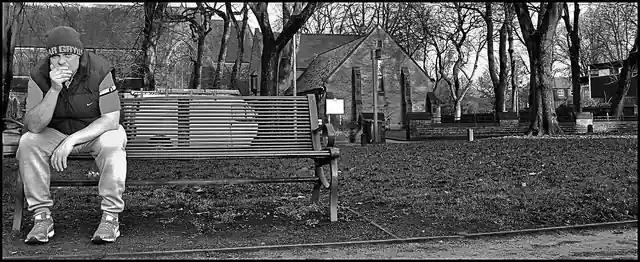
Most prayer pages never say this: sometimes you are too tired to pray a long prayer, and that is okay. God is not grading your prayer by length. On the hardest days, a short prayer prayed honestly is worth more than a long prayer you cannot mean. If all you have today is one sentence, make it a true one. “Lord, help me.” “Jesus, I need You.” “Father, I am tired, and I trust You anyway.” Say it once, slowly, and then be still for a minute. That counts. That is prayer.
Keep a few short prayers ready for the moments when tiredness hits suddenly — in traffic, before a meeting, beside a hospital bed, in the middle of the night: “Lord, give me strength for this next hour, not the whole week.” “God, be my refuge and my strength right now.” “Jesus, strengthen me for today, and let tomorrow wait until tomorrow.” If even words feel like too much, pray without words for a while. Sit quietly. Breathe. The Spirit intercedes for us when we do not know what to pray. You are not failing at prayer because you are silent. Silence with God is still prayer, especially on days when speech costs more than you have.
Short Prayers for Strength in Specific Moments
Sometimes you do not need strength in general; you need it for the next hour, in one named place. Before a hard conversation, pray: “Lord, steady my voice and my temper. Help me say what is true without saying it cruelly, and help me listen as well as I speak. Amen.” For a caregiver’s long day, pray: “Father, I am tired before the day has properly begun. Give me patience for the next task, kindness when I feel empty, and one moment of rest I did not have to steal. Amen.” When grief is heavy, pray: “God, I do not have the strength to carry this loss and this day at the same time. Carry me through the next hour, and let me grieve without pretending I am fine. Amen.” Short, named prayers like these are easier to pray honestly than one big prayer for everything, and they are easier to answer in ways you can actually notice.
Strength for Today, and for This Week

God usually gives strength the way He gave manna — daily. Receive today’s portion in prayer, then return tomorrow. That is why a rhythm helps more than a single emotional moment. Start your mornings with our morning prayer and the prayer for today; begin every week surrendered with the Monday prayer. Small, repeated prayers do what grand resolutions cannot: they keep you coming back to the source instead of running on yesterday’s strength.
Prayer is not the opposite of practical help. God often restores strength through ordinary means, and it is wise — not unfaithful — to use them. Drink water. Eat something real, not just caffeine. Go outside for ten minutes. Move gently. Go to bed a little earlier, and put the phone in another room if you can. And shrink the day: choose three things that actually matter today — not ten, three — and let the rest wait or be done imperfectly. If exhaustion persists, or if you notice symptoms that worry you, talk to a doctor as well. Prayer and good medicine are partners, not rivals, and asking for medical help is not a lack of faith.
Strong Enough to Ask for Help

Needing help is not a failure of faith. Moses needed Aaron to hold up his arms; Paul asked churches to pray for him. Jesus Himself, in Gethsemane, asked His closest friends to stay awake with Him. If the Son of God did not carry everything alone, why do we think we must? If you need others standing with you, share your burden on our prayer request page — our team will pray for your strength by name, today.
In real life, tell one trusted person the unedited version, not the polished one. Not “I’m fine, just busy,” but “I’m tired in a way sleep is not fixing, and I could use prayer.” You may be surprised how many people answer, “Me too.” There is also a quieter kind of help worth receiving: letting someone else carry a task for a season. Let a friend cook. Let a colleague cover a shift. Let your family do things imperfectly for a while. The house will survive a week of imperfect. You might not survive a month of pretending you can do it all. Strength, in the long run, is less about never needing help and more about knowing when to receive it gracefully.
What Strength Does Not Look Like
It is worth naming the counterfeits, because they are loud. Strength does not look like never crying. Tears are not a leak in your faith; they are often the most honest prayer you have. Strength does not look like never resting, never saying no, never admitting you are overwhelmed. That is not strength. That is burnout with a spiritual label on it. And strength does not look like pretending everything is fine so other people feel comfortable. That performance costs more energy than the original problem.
Real strength, the kind God gives, is often quiet and unimpressive from the outside. It is getting up and making breakfast when you feel hollow inside. It is answering a hard email kindly instead of angrily. It is apologizing when you were short-tempered, forgiving when you would rather hold a grudge, and going to bed without solving everything. If that is what your day looked like, do not let anyone — including yourself — tell you it was a weak day. It was a day you walked and did not faint. In Isaiah’s language, that counts as renewed strength.
A Short Prayer for Someone Else Who Is Weak
Sometimes you are reading this because someone you love is running on empty, and you do not know what to say to them. Pray specifically. Name them. Name what they are facing, as far as you know it. “Lord, I lift up [name] to You. You see how tired they are, even when they are hiding it well. Strengthen them today in the place they feel weakest. Give them rest tonight that actually restores them. Give them one person who notices, one moment of kindness, one reason to keep going. And give me wisdom to help in a way that actually helps — a meal, a ride, a quiet presence — not just advice. Hold them, Lord, the way I wish I could. Amen.” Then, if you can, tell them you prayed. A text that says, “I prayed for your strength today” can carry a person further than a long speech about staying positive.
Frequently Asked Questions
What is a powerful prayer for strength? A powerful strength prayer honestly admits weakness, asks God to renew your strength as Isaiah 40:31 promises, and commits to taking just the next step in faith — like the prayer at the top of this page. Power in prayer does not come from long or fancy words. It comes from honesty, from Scripture, and from trust.
What does the Bible say about strength in hard times? Scripture promises that God is the strength of our hearts (Psalm 73:26), that His grace is sufficient in weakness (2 Corinthians 12:9), that He gives power to the faint (Isaiah 40:29), and that those who wait on Him will renew their strength (Isaiah 40:31). Together, those verses say something consistent: God’s strength meets us where ours ends, not where it pretends to be enough.
How do I pray for strength when I am too tired to pray? Pray one true sentence: “Lord, help me,” or “Jesus, strengthen me for today.” You can also pray a verse back to God, sit quietly with Him, or ask someone else to pray for you. God hears short, tired prayers just as clearly as long ones.
What is the difference between strength and courage? They overlap, but they are not identical. Strength is the capacity to keep going; courage is the willingness to take the next step even while you are afraid. You often need both at once — strength for the long haul, courage for the hard conversation or the decision you have been avoiding. Pray for both by name.
Can I pray for physical strength, or only spiritual strength? Both. God cares about your body as well as your soul. Pray for sleep, for healing, for energy for the work in front of you, and for wisdom about rest, food, movement, and medical care. A rested body prays more clearly, and a peaceful heart often helps the body rest.
What if I pray for strength and still feel weak? Feeling weak after prayer does not mean prayer failed. Strength often returns gradually, in small steps, not in a single surge. Keep praying daily, keep taking the next step, keep asking for help, and keep resting. If weakness persists, talk to a trusted friend, a pastor, or a doctor, and let others pray with you. Sometimes God’s answer is not instant energy, but a community, a rhythm, and a quiet endurance you only recognize looking back.

The Praytivo Editorial Team writes and curates Bible-based prayers, devotionals, and verse reflections to help you pray with confidence every day.