A Prayer for Provision
There is a particular quiet that falls over a kitchen table when the numbers do not add up, and a prayer for provision often starts right there. Not in a church, not with beautiful words, but with a bill in one hand, a calculator or a banking app in the other, and a feeling in your chest that is hard to name — part worry, part embarrassment, part tiredness from carrying it alone. Maybe the rent is due before the paycheck clears. Maybe the car repair cost twice what you expected. Maybe work slowed down, hours were cut, a client disappeared, or a small business had a thin month that followed another thin month. Maybe you are a parent doing the math on groceries, school costs, and medicine, and wondering how everyone else seems to manage. If that is where you are tonight, this prayer is for you, and it begins with something important: needing provision is not a sign that you have failed. It is a sign that you are human, living in a world where needs are real, money is finite, and even faithful people sometimes come up short.
I want to be honest about what this article will and will not do. It will not promise that praying a certain prayer will make money appear, clear your debt by Friday, or guarantee a promotion. Any prayer page that promises that is selling something, not praying with you. What this prayer will do is place your real needs before a God the Bible calls Provider, ask for daily bread and for wisdom, and help you think clearly about the next faithful step. Prayer for provision, at its best, does two things at once: it trusts God to provide, and it frees you to act wisely with what you have. Those are not opposites. The farmer who prays for rain still plants the seed. The parent who prays for groceries still makes a list, checks what is in the pantry, and asks a neighbor for help if needed. Trust and stewardship belong together, and this article holds both, without shame and without hype.

What Provision Really Means
When most of us hear the word provision, we hear money, and money is part of it. Rent, food, utilities, medicine, transportation, school supplies — those are real needs, and God cares about them. But the Bible’s picture of provision is wider than a bank balance, and widening the picture can actually relieve some pressure. Provision includes daily bread, yes, but also work itself: a job, clients, hours, a skill you can use, a door that opens when another closes. It includes wisdom: knowing what to cut, what to wait on, what to ask for, and what to say no to, even when saying no is hard. It includes help from other people: a family member who watches the kids so you can work an extra shift, a church or community fund that covers a bill without humiliation, a friend who shares a meal without making it a big deal. It includes health and strength to work, peace of mind to sleep and think clearly, and contentment — that quiet ability to be grateful for what you have while still honestly asking for what you need. When you pray for provision in only the money sense, you can miss the other ways God is already providing, and miss the practical helps that are part of the answer.
The story of manna in the wilderness is the Bible’s great lesson in daily provision, and it is worth sitting with, because it corrects two common misunderstandings. The Israelites, freed from Egypt but wandering in a desert, woke each morning to find a strange bread-like substance on the ground. God told them to gather only what they needed for that day, except before the Sabbath, when they gathered double. If they tried to hoard extra, it spoiled. The lesson was not that God is stingy. The lesson was that provision is daily, and trust is daily. You cannot stockpile tomorrow’s trust today, any more than you can eat tomorrow’s bread today. For a modern reader, that story reframes prayer for provision from a one-time breakthrough event into a daily practice: today, give us today. Today, show me today’s step. Today, help me use today’s resources faithfully. That daily frame does not solve a large debt overnight, and it is honest to admit that. But it does break an overwhelming financial mountain into today’s hill, which is climbable, and tomorrow’s hill, which you will face tomorrow, with whatever provision tomorrow brings. Many people find that shift — from “solve my whole financial life” to “provide for today and guide my next step” — is what finally lets them breathe, sleep, and think clearly enough to make good decisions.
There is also a quieter kind of provision that rarely makes it into prayer articles: provision through limits. Sometimes the most helpful answer to a prayer for more is wisdom about less — not as punishment, but as clarity. A smaller apartment that lets you breathe. A subscription canceled without guilt. A side project paused so a main job can thrive. A “no” to a good opportunity so you can say “yes” to rest, family, or health. Our culture tells us provision always means increase, but the Bible also honors sufficiency: having enough, using it well, and being content without constantly chasing more. Paul, writing from prison, said he had learned to be content in plenty and in want, not because his circumstances were perfect, but because his sufficiency was in Christ. That does not mean you should stop asking for what you need. It means you can ask without believing that your worth depends on the answer being “more.” You can pray for provision and also pray for contentment, in the same breath, and both prayers are faithful.

What the Bible Says About God as Provider
The anchor verse for this prayer is Philippians 4:19. Paul, writing to a church that had generously supported him, says in the World English Bible, “My God will supply every need of yours according to his riches in glory in Christ Jesus.” Read the verse carefully, because its details protect it from misuse. Paul says “every need,” not “every want,” and not “every desire on your timeline.” He says “according to his riches,” which means provision comes from God’s abundance, not from your ability to earn it, but also that its form is God’s to choose. It may come as work, as wisdom, as a gift, as a cheaper solution you had not considered, as help from a community, or as strength to endure a lean season with dignity. And he says it in the context of generosity: the Philippians had given sacrificially, and Paul is assuring them that the God they trusted with their giving will also care for their needs. This verse is a promise of God’s faithful care, not a formula for wealth, and it has comforted people in plenty and in poverty precisely because it does not tie God’s love to a bank balance.
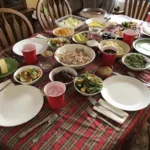
Jesus teaches the same daily trust in the Lord’s Prayer, when he tells his followers to pray, “Give us today our daily bread,” in Matthew 6:11 in the World English Bible. Daily bread is a humble, concrete request. It is not “give us a year’s supply and a promotion.” It is bread for today, for this household, for these mouths at this table. That humility is liberating. You do not need to justify your need with a grand spiritual reason. Hunger is reason enough. Rent is reason enough. Medicine is reason enough. A child’s shoes are reason enough. When you pray for daily bread, you are praying like a child asking a parent for dinner — simply, trustingly, without a business plan attached. And Jesus places that request right in the middle of a prayer that also asks for forgiveness, guidance, and deliverance, which tells you something: daily needs are not a lesser, unspiritual topic. They belong in the same prayer as forgiveness and God’s kingdom, because God cares about bodies as well as souls, about tables as well as temples.
Psalm 23:1 adds the shepherd’s perspective: “Yahweh is my shepherd: I shall lack nothing,” in the World English Bible. That is a startling claim from a man who lacked many things at various points in his life — safety, a home, a son’s loyalty, peace. David is not saying he never experienced want. He is saying that with God as shepherd, his deepest lack is met, and that provision is ultimately relational: a shepherd who leads, protects, and stays close, even in dark valleys. For a person praying about money, that verse can reframe the question from “Will I have enough?” to “Who is with me while I figure out enough?” The answer — a shepherd who knows the terrain, who has led others through lean seasons before, who does not abandon sheep when the pasture is thin — does not pay the bill by itself. But it changes how you face the bill: not alone, not abandoned, not defined by the shortfall. And in practical terms, that steadiness often leads to better decisions, because panic makes expensive mistakes, while a calmer mind can compare options, ask for help, and wait a day before signing something costly. God’s provision, in David’s picture, includes the presence that keeps you steady enough to steward well.

A Full Prayer for Provision
Pray this slowly, and feel free to name your specific needs where the prayer leaves room. Specific prayer is not demanding; it is honest. God already knows the bill, the rent, the job, and the worry. Naming them is for your heart, not for His information.
Heavenly Father, you are my Provider, and I come to you with real needs, not abstract ones. You know the bills on my table, the rent that is coming due, the groceries my family needs, the work I am hoping for, and the debt that feels heavier every month. I bring them all to you, because I cannot carry them alone and I do not want to pretend I can. Lord, provide for today. Give us our daily bread — food on the table, a roof over our heads, medicine when it is needed, and transportation to get where we need to go. If there is work to be done, open the door to it. If there is a client, a job, an opportunity, or a shift that would help, guide me toward it and give me favor and diligence to do it well. Give me wisdom for money decisions: what to pay first, what to wait on, what to cut without shame, and what to keep because it protects my family. Quiet the panic that makes me rush into bad choices, and give me a clear mind for the next step, even if I cannot see the whole road. Help me ask for help when I need it, without letting pride keep me from accepting a meal, a gift, a community fund, or a friend’s practical support. Remind me that receiving help is not failure; it is how your people have always cared for one another. Teach me to use what I have faithfully, even when it feels small. Show me resources I have overlooked — skills I can offer, things I can sell, help I can trade, time I can use wisely. And give me contentment alongside expectation: gratitude for what is already provided, without pretending I do not still need more. If this season is long, sustain me through it day by day, the way you sustained your people with daily bread. If a breakthrough comes, help me receive it with humility and generosity, remembering others who are still waiting. Bless my family in this season. Protect them from the stress that money trouble brings into a home, and give us peace at the table even when the budget is tight. I trust you, Lord, not because I can predict how provision will come, but because you have been faithful before, and because you care for the people you made. Provide, guide, and keep us, today and in the days ahead. In Jesus’ name, Amen.
After praying, it can help to write down, in plain language, what you actually asked for. Not as a test God must pass, but as a record for yourself. “This week I need: rent by Friday, groceries, gas for work.” That list does two things. First, it turns vague financial dread — which always feels larger than it is — into specific items, some of which may have specific solutions you had not noticed while the worry stayed vague. Second, it lets you notice provision when it comes in unexpected forms: a friend’s gift card that covers groceries, an extra shift, a bill you can negotiate down, a community program you did not know existed. Provision rarely arrives exactly as we pictured it, and a written list helps you recognize it when it arrives differently. Keep the list short, revisit it daily, and update it as needs change. Prayer plus a list is not unspiritual bookkeeping. It is stewardship: naming reality honestly, before God and before yourself, so you can act on it wisely.

Stewardship Without Shame: Practical Steps After Prayer
Prayer does not replace practical wisdom, and practical wisdom does not replace prayer. The healthiest approach holds both, without shame. Start by getting a clear, kind picture of where you actually stand. That sounds obvious, but many people avoid looking at bank balances and bills because looking feels frightening, and avoidance makes the fear grow. Sit down for twenty minutes, with a cup of coffee and without self-judgment, and list what is coming in, what must go out, and what is due when. You are not doing this to scold yourself. You are doing this to see reality, because you cannot steward what you will not look at. If the numbers are painful, let them be painful for twenty minutes, and then close the notebook and pray again. Clarity, even painful clarity, is better than vague dread, because clarity can be acted on and dread cannot.
Next, separate needs from wants for this season, gently. Needs are housing, food, utilities, transportation to work, medicine, and minimum debt payments. Wants are everything else, including good things that simply need to wait. This is not a permanent judgment on your lifestyle; it is a seasonal triage, like a hospital deciding what needs attention first. Cutting a want for a season is not a moral failure, and keeping a small joy — a coffee with a friend, a modest treat for a child — is not irresponsibility. A budget that allows zero joy will not last, and a budget that protects one small joy while cutting larger drains is often more sustainable. If debt is part of the picture, consider contacting creditors or a reputable nonprofit credit counselor to ask about payment plans, hardship options, or lower interest arrangements. Many creditors would rather negotiate than lose payment entirely, and a counselor can help you sort options without selling you a product. This article is not financial advice, and it does not replace a qualified professional, but asking for information is a faithful, practical step, and it pairs well with prayer rather than competing with it.
Third, think about help as part of provision, not as a last resort. Churches, community organizations, food banks, utility assistance programs, and local charities exist precisely for seasons like this, and using them is not taking advantage. It is using a resource God often provides through other people’s generosity. If shame is the barrier, remember that the Philippians’ giving, which Paul celebrated, only helped because Paul was willing to receive it. Generosity needs receivers, or it has nowhere to go. Your receiving today may become your giving tomorrow, when a lean season ends and you are the one who can help someone else. Also consider non-money help: childcare swaps, skill trades, shared meals, rides to work. Provision is often communal before it is financial, and a community that shares practical help is practicing provision in its oldest, most biblical form. Ask one trusted person this week: “Is there a program, a person, or a practical help you know about that I might have missed?” That single question has opened doors for many people who thought they had already tried everything.
Finally, protect the small habits that keep a lean season from becoming a despairing one. Keep a simple daily rhythm: prayer in the morning, one practical money task per day (not ten), a walk or a moment outside, a meal eaten sitting down rather than standing in worry. Avoid financial decisions made late at night, when anxiety is loudest and judgment is weakest; sleep on large purchases, contracts, or borrowing decisions whenever you safely can. And be careful with promises that sound too good: anyone who asks you to pay money to unlock a blessing, or who guarantees wealth in exchange for a donation or a specific prayer, is not describing biblical provision. Biblical provision is daily bread from a faithful God, stewarded wisely, shared in community, and received with gratitude — not a transaction, not a lottery ticket, and not a test of whether you believed hard enough. If a season stays hard despite prayer and wise steps, that is not proof you failed. It is proof that life is hard, and that you need continued support, continued prayer, and continued community, for as long as the season lasts.
Waiting Well When Provision Is Slow
Perhaps the hardest part of praying for provision is the waiting. You prayed, you budgeted, you asked for help, and the answer has not arrived in the form or on the timeline you hoped for. Waiting can feel like God’s silence, and silence can feel like absence. The Bible does not rush past that feeling. The Israelites waited in the wilderness. David waited years between being anointed king and actually becoming one. Paul waited in prison and still wrote about contentment. Waiting, in Scripture, is rarely passive. It is active trust: gathering today’s manna, doing today’s work, making today’s wise choice, and trusting God for tomorrow’s bread when tomorrow comes. If you are waiting, it can help to mark small provisions rather than only waiting for a large one. A meal provided. A bill negotiated down. A day of work found. A friend’s encouragement at exactly the right moment. Those small provisions are not consolation prizes. They are evidence that provision is happening, daily, even while the larger need remains unresolved.
Contentment in a waiting season is not the same as giving up. Giving up says, “Nothing will change, so I will stop trying.” Contentment says, “I will keep asking, keep working, keep stewarding, and I will also find gratitude for what is here today.” That distinction matters, because contentment protects your heart from two opposite traps: frantic striving that burns you out, and bitter resignation that closes you off from help. You can pray both prayers in the same day: “Lord, provide more, I need it,” and “Lord, thank you for what I have today.” Both are honest. Both are faithful. And over time, many people find that the second prayer makes the first one easier to pray, because gratitude steadies the heart that worry shakes. If waiting has lasted a long time and is affecting your sleep, your health, or your hope, talk with a trusted pastor, counselor, or community support worker, not only about money, but about the weight of waiting itself. You deserve support for the emotional cost of a lean season, not only advice about the financial part. Provision, in the end, is not only about what you have. It is about who walks with you while you wait, and the God who, as Philippians promises, supplies needs according to His riches — in His time, in His way, and often through people who show up, day by day, with bread for today.
Frequently Asked Questions
Does praying for provision mean God will make me wealthy?
No. The Bible promises God’s faithful care for our needs, not wealth as a reward for faith. Philippians 4:19 says God will supply every need according to His riches, but it does not promise a specific income, a debt-free life by a certain date, or prosperity as proof of belief. Pray for daily needs, for work, for wisdom, and for contentment, and be wary of any teaching that ties God’s love to your bank balance or asks you to pay for a promised breakthrough.
What should I do while I wait for provision?
Pray daily and specifically, get a clear picture of your finances without shame, take one practical step per day (a call, a budget review, asking about assistance), and accept help from community resources when it is offered. Keep a short list of actual needs so you can recognize provision when it arrives in unexpected forms. If waiting is harming your sleep, health, or hope, talk with a pastor, counselor, or trusted support worker as well as seeking financial guidance from a qualified professional.
Is it wrong to pray for money?
No. Praying for rent, food, medicine, work, or a child’s needs is praying for daily bread, which Jesus himself taught his followers to pray. What matters is the heart behind the prayer: asking honestly for needs, trusting God’s wisdom about how provision comes, stewarding what you have, and avoiding the belief that faith is a tool to control outcomes. You can pray for money and also pray for wisdom, generosity, and contentment in the same prayer.
How can I pray for provision for someone else?
Name their situation specifically if you know it, pray for daily needs and practical doors (work, help, wise decisions), and pair prayer with practical support where you can: a meal, a grocery gift card, a ride, help with an application, or simply a listening ear. Avoid promising them a specific financial outcome or implying their struggle is caused by weak faith. A prayer like, “God, provide for my friend today, open a practical door, and give them peace and dignity in this season,” paired with real help, is both faithful and kind.
Related Prayers
Provision touches work, home, and daily bread together, so these prayers fit naturally alongside this one:
- prayer for financial breakthrough
- prayer for debt relief
- prayer for a new job
- prayer for business success
- prayer for a job

The Praytivo Editorial Team writes and curates Bible-based prayers, devotionals, and verse reflections to help you pray with confidence every day.